





What's Happening?
The Gates Foundation has launched a significant coalition involving 60 partners, including major AI labs like Anthropic, Google, and OpenAI Foundation, to enhance the accessibility of artificial intelligence in underrepresented languages. The initiative
aims to reach over 3 billion people within five years by coordinating existing efforts to build more representative language data sets for AI tools. Gates Foundation CEO Mark Suzman emphasized the urgency of this work, stating that it must continue 'full speed ahead' despite calls from some AI companies to slow down advanced model development. The foundation believes that expanding language diversity in AI is crucial for combating global inequality, particularly in areas like health outcomes, education, and agricultural practices. The coalition seeks to rectify the 'original sin' of AI tools being predominantly trained on unrepresentative internet data, which often leads to mistranslations and cultural biases, especially in African languages.
Why It's Important?
This initiative is critically important for addressing the inherent biases and limitations of current AI models, which largely reflect the linguistic and cultural data prevalent on the internet. By focusing on underrepresented languages, the coalition aims to democratize access to AI's benefits, ensuring that its applications can genuinely serve diverse global populations. The current lack of linguistic diversity in AI data sets can lead to significant errors, such as mistranslating critical medical information, which can have severe consequences in healthcare. Furthermore, it hinders the development of educational tools and agricultural guidance tailored to specific communities, perpetuating existing inequalities. This effort underscores the ethical imperative to build inclusive AI that understands and respects cultural nuances, preventing the technology from exacerbating global disparities. The involvement of major AI developers signals a growing recognition within the industry of the need for more equitable and representative AI development.
What's Next?
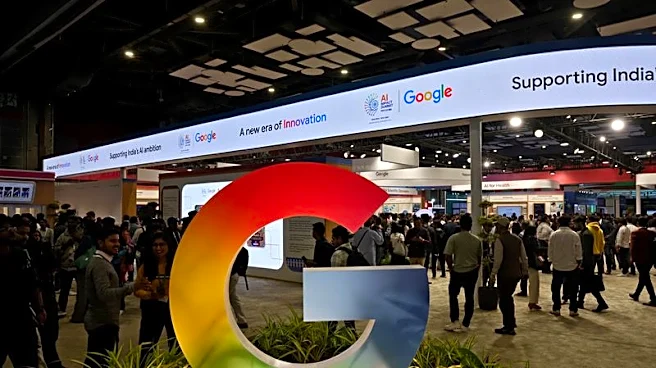
The coalition will focus on establishing governance structures and tracking the commitments of its 60 partners to ensure effective coordination and progress. A key aspect will be the development of mechanisms for communities to upload cultural and linguistic data sets on their own terms, moving away from unauthorized data scraping. Google, a coalition member, is already funding Project Vaani in India to collect extensive audio data across various dialects, setting a precedent for similar efforts. The Gates Foundation will likely play a role in identifying and addressing gaps in language data collection and AI development. This initiative is expected to lead to more culturally sensitive and accurate AI tools, which could significantly impact global health, education, and economic development. The success of this coalition could also influence future AI regulatory frameworks, emphasizing the importance of data diversity and ethical AI development on a global scale.
Beyond the Headlines
Beyond the immediate goal of linguistic diversity, this initiative touches upon deeper philosophical questions about the nature of intelligence and representation in AI. The 'original sin' of training AI on unrepresentative internet data highlights how human biases can be inadvertently encoded into artificial systems, perpetuating and amplifying existing societal inequalities. This effort is not just about translation; it's about ensuring that AI can genuinely understand and interact with the world's vast array of human experiences and knowledge systems. It challenges the notion of a universal AI that can serve all, instead advocating for a pluralistic approach that respects and incorporates diverse cultural and linguistic contexts. The success of this coalition could set a new standard for ethical AI development, emphasizing that true intelligence in AI must be inclusive, culturally aware, and representative of all humanity, rather than just a dominant few.