
What's Happening?
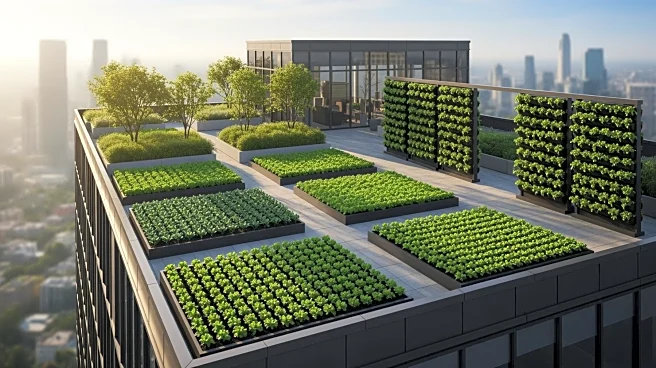
City Arrow Tower has launched a new urban agriculture demonstration base in Kuala Lumpur, Malaysia, aimed at addressing food security challenges in highly urbanized areas. The project utilizes a high-pressure
aeroponic tower system, which allows precise control over water, nutrients, light, and growth cycles, transforming agriculture into a tangible asset class. This system is designed to reduce reliance on imported vegetables by creating a local supply system that is resilient and efficient. The initiative is part of Malaysia's broader strategy to modernize agriculture and integrate food production into urban infrastructure, responding to the pressures of climate instability, fluctuating energy prices, and geopolitical risks.
Why It's Important?
The launch of City Arrow Tower's urban agriculture project in Kuala Lumpur is significant as it represents a shift towards sustainable food production within urban environments. By reducing dependency on imported food, the project aims to stabilize prices and enhance food safety. This approach aligns with Malaysia's national strategy to modernize agriculture and improve food security. The project's success could serve as a model for other densely populated cities facing similar challenges, potentially leading to widespread adoption of urban agriculture systems that contribute to resource efficiency and environmental sustainability.
What's Next?
The Kuala Lumpur demonstration base is expected to serve as a prototype for future urban agriculture projects, with plans to expand the model to other cities. The project will continue to develop its distributed production network, leveraging digital management platforms for operational transparency and efficiency. As the initiative progresses, it may attract interest from policymakers and urban planners seeking to integrate food production into city infrastructure, potentially influencing agricultural policies and practices on a broader scale.
Beyond the Headlines
The City Arrow Tower project highlights the potential for urban areas to become active participants in food production, challenging traditional notions of agriculture as a rural activity. By embedding food production within cities, the project redefines the relationship between urban environments and natural resources, promoting a more sustainable and resilient food system. This approach could lead to long-term shifts in urban planning and development, emphasizing the importance of integrating agriculture into the urban fabric.