



What's Happening?
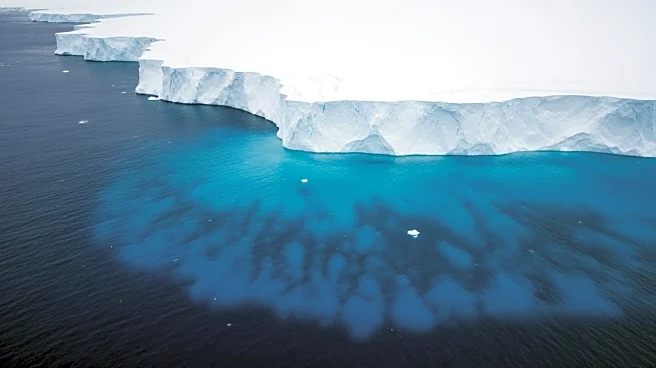
Researchers from the University of Wisconsin-Madison have discovered a link between the growth of Antarctica's ice sheets and marine biological productivity in the subtropical ocean. The study, published in the Proceedings of the National Academy of Sciences,
highlights the influence of Earth's 40,000-year axial tilt cycle on ocean productivity. This cycle, known as the obliquity cycle, was found to affect subtropical ocean productivity around 34 million years ago, coinciding with the first expansion of the Antarctic ice sheet. The research involved analyzing chemical signals in ocean sediment cores collected during drilling expeditions, revealing how nutrient delivery from the Southern Ocean influenced subtropical marine life.
Why It's Important?
This study provides new insights into the interconnectedness of Earth's climate systems, demonstrating how changes in polar regions can impact distant marine ecosystems. Understanding these connections is crucial for predicting future climate changes and their effects on global ocean dynamics. The findings could inform climate models and help scientists anticipate shifts in marine productivity, which is vital for maintaining healthy ocean ecosystems and supporting global fisheries. The research also underscores the importance of studying past climate events to better understand current and future environmental changes.