

What's Happening?
Attorney General Pam Bondi has announced a rollback of regulations related to the legal doctrine of 'disparate impact,' which previously encouraged institutions to address racial and ethnic disparities. This doctrine, part of the Civil Rights Act of 1964,
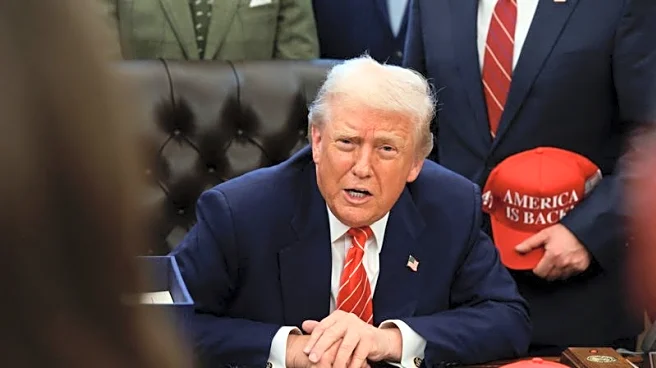
allowed for civil rights violations to be claimed based on different average outcomes among groups, even without intent to discriminate. Bondi's revised regulatory guidance aims to eliminate penalties for unintentional disparate outcomes, reducing compliance costs for institutions like police departments and universities. The rollback follows an executive order by President Trump targeting these practices, emphasizing that intentional discrimination remains illegal.
Why It's Important?
The rollback of disparate impact regulations marks a significant shift in how civil rights laws are applied, potentially reducing the regulatory burden on institutions that receive Justice Department grants. By removing the requirement to address unintentional disparities, the change could lead to less emphasis on racial and ethnic classifications in decision-making processes. This move is part of a broader effort to reduce what some view as overreach in civil rights enforcement, aligning with conservative critiques of 'woke' policies. However, it also raises concerns about the potential for reduced accountability in addressing systemic inequalities, as the focus shifts away from outcomes to intent.
Beyond the Headlines
The rollback of disparate impact regulations could have long-term implications for how civil rights are enforced in the United States. By focusing on intent rather than outcomes, the change may lead to a reevaluation of how institutions approach diversity and inclusion. Critics argue that this could undermine efforts to address systemic discrimination, while supporters claim it reduces unnecessary regulatory burdens. The decision reflects ongoing debates about the role of government in addressing social inequalities and the balance between individual rights and collective outcomes. As other departments consider similar rollbacks, the broader impact on civil rights enforcement will be closely watched.