





What's Happening?
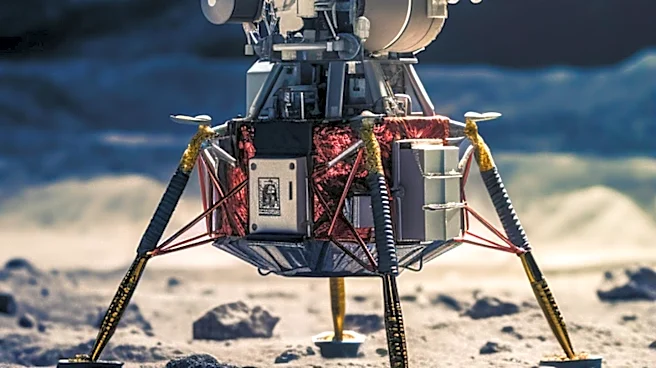
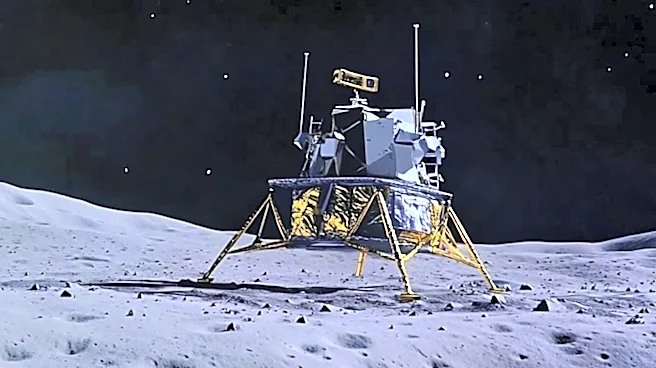
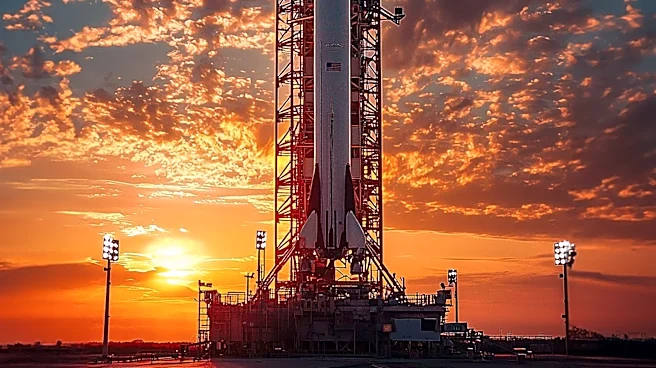
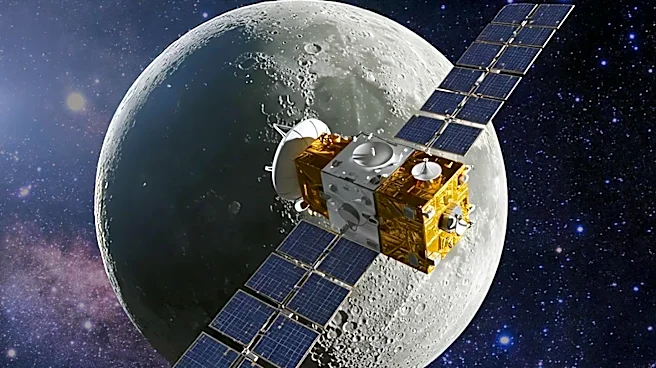
The Indian Space Research Organisation (ISRO) and the Japan Aerospace Exploration Agency (JAXA) are collaborating on the Chandrayaan-5 mission, also known as the Lunar Polar Exploration Mission (LUPEX). Scheduled for launch in 2028, this mission aims
to explore the Moon's south polar region, focusing on the study of water and water-ice. The mission will feature a rover developed by JAXA and a lander developed by ISRO, with additional scientific payloads from NASA and the European Space Agency (ESA). The mission's objectives include detecting and analyzing lunar water resources, particularly in permanently shadowed regions, and supporting future human exploration.
Why It's Important?
The Chandrayaan-5 mission represents a significant step in international space collaboration, enhancing India's role in global lunar exploration. By studying lunar water-ice, the mission could provide critical insights for future human habitation and resource utilization on the Moon. The collaboration with JAXA, NASA, and ESA underscores India's growing influence in space diplomacy and technological innovation. The mission also aligns with broader international goals, such as the Artemis program, and could pave the way for more joint missions and scientific advancements.
What's Next?
As the mission progresses, ISRO and JAXA will continue to refine technical coordination, including inter-spacecraft communication and payload integration. The mission's success could lead to further international partnerships and advancements in lunar exploration technology. Additionally, the data collected could inform future missions aimed at sustainable lunar habitation and resource utilization, potentially influencing global space policy and exploration strategies.