



What's Happening?
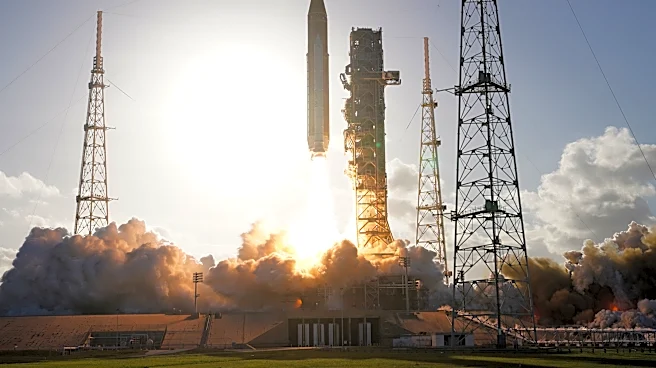
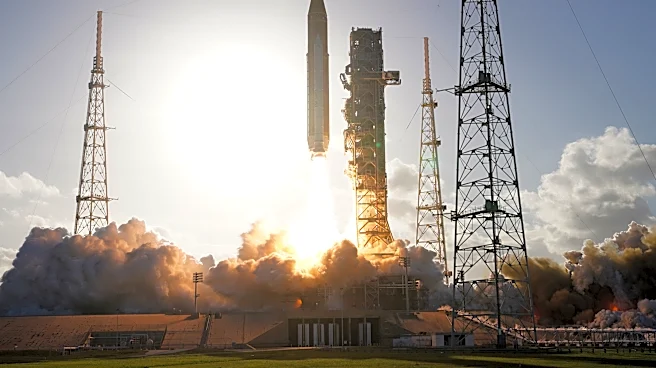
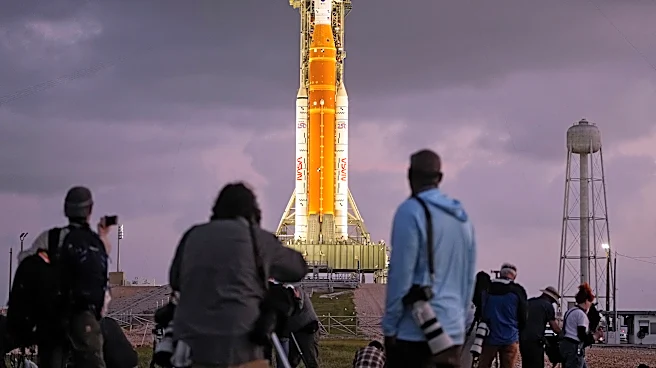
NASA successfully launched the Artemis II mission, sending four astronauts on the first crewed flight around the moon in over fifty years. The mission, which lifted off from Kennedy Space Center in Florida, involves the Lockheed Martin-built Orion spacecraft
on a planned 10-day journey. The crew includes NASA astronauts Reid Wiseman, Victor Glover, Christina Koch, and Canadian Space Agency astronaut Jeremy Hansen. This mission is part of NASA's broader Artemis program, aimed at establishing a sustainable human presence on the moon and preparing for future Mars missions. The spacecraft has deployed its solar arrays and begun system checkouts as it transitions into flight operations.
Why It's Important?
The Artemis II mission represents a significant milestone in space exploration, marking a renewed focus on lunar missions and international collaboration. It underscores the growing partnership between government and industry in advancing space capabilities. The mission's success could pave the way for future lunar bases and Mars exploration, potentially transforming human space travel. It also highlights the strategic importance of space exploration in technological innovation and international cooperation, with implications for scientific research, economic opportunities, and geopolitical dynamics.
What's Next?
Following the Artemis II mission, NASA plans to continue its Artemis program with subsequent missions aimed at landing astronauts on the lunar surface and establishing a permanent base. These efforts will involve further collaboration with international partners and private industry, focusing on developing technologies for long-duration space travel. The success of Artemis II will inform preparations for these future missions, including potential Mars exploration, as NASA seeks to expand human presence beyond Earth.