






What's Happening?
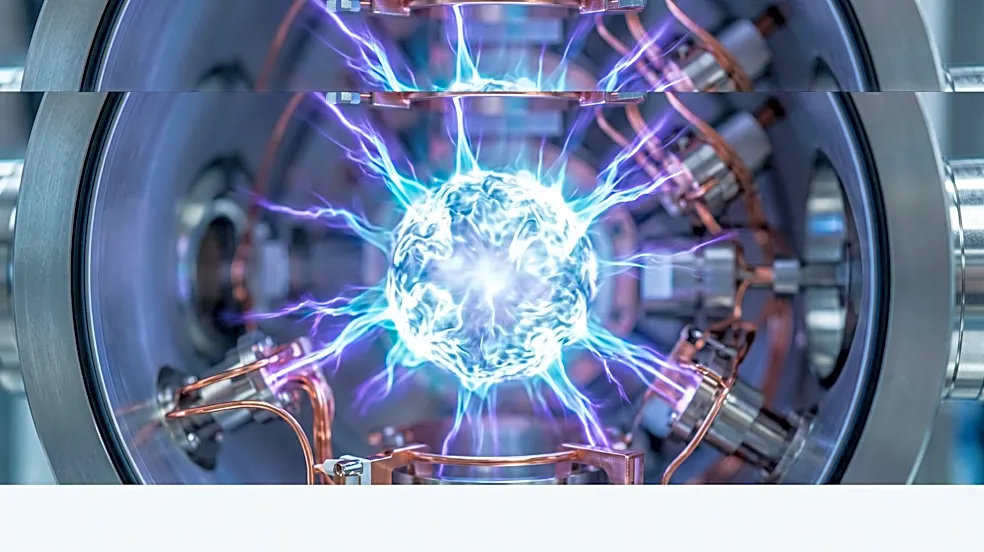
Scientists have successfully recreated tiny bursts of electromagnetic radiation, known as solar nanoflares, in a laboratory setting. This experiment, conducted by Wei Sun and his colleagues at the China Institute of Atomic Energy, utilized powerful lasers
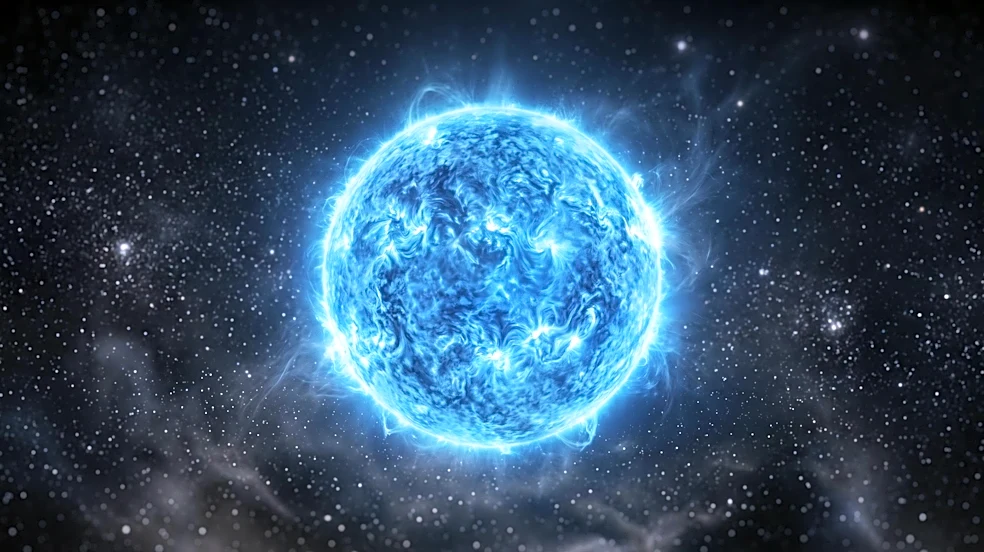
fired onto a small plastic target to produce a plasma patch that mimicked conditions on the sun. For decades, the sun's corona, its outer atmospheric layer, has puzzled scientists by being thousands of times hotter than its surface. The lab experiment demonstrated that these nanoflares could be a key mechanism powering the corona's extreme heat. By creating plasmas in two scenarios—one with a flat target and another with a wavy surface—researchers observed that the wavy surface led to unstable plasma and magnetic field rearrangements, ultimately producing a nanoflare. This nanoflare significantly increased the plasma's temperature, nearly doubling it compared to the flat target experiment where no nanoflares occurred.
Why It's Important?
This breakthrough offers a potential explanation for one of the longest-standing mysteries in solar physics: the coronal heating problem. Understanding how the sun's corona reaches millions of degrees Celsius is crucial for comprehending solar activity, space weather, and their impacts on Earth. Solar flares and coronal mass ejections, driven by processes in the corona, can disrupt satellites, power grids, and communication systems. By demonstrating that nanoflares can heat plasma to extreme temperatures, the experiment provides strong evidence for their role in this phenomenon. This research not only advances fundamental solar physics but also contributes to improving predictions of space weather events, which are vital for protecting critical infrastructure and astronauts in space. The ability to emulate these conditions in a lab allows for controlled study, which is difficult with direct solar observations.
What's Next?
Wei Sun and his team plan to upgrade their experimental setup to create more three-dimensional plasmas and employ more precise techniques for diagnosing their behavior. A key next step involves making their laboratory measurements more directly comparable to real-world solar data collected through telescopes. This will help validate their findings against actual solar phenomena. While the experiment provides a compelling piece of the puzzle, researchers like Rony Keppens at KU Leuven note that other plasma behaviors, such as certain types of waves, might also contribute to coronal heating. Therefore, future research will likely involve integrating these findings with other potential mechanisms to develop a more complete model of coronal heating. Continued collaboration between laboratory experiments and observational astronomy will be essential.
Beyond the Headlines
The successful recreation of solar nanoflares in a laboratory setting represents a significant advancement in plasma physics and astrophysics. It highlights the power of experimental physics to simulate extreme cosmic environments and test theoretical models. This research could have broader implications beyond solar physics, potentially informing studies of other stellar atmospheres and plasma phenomena throughout the universe. The techniques developed for generating and analyzing these high-temperature plasmas could also find applications in fusion energy research, where controlling and heating plasma is a central challenge. Furthermore, the ongoing quest to understand the sun's fundamental processes underscores humanity's continuous drive to unravel the mysteries of the cosmos, pushing the boundaries of scientific inquiry and technological innovation.