
What's Happening?
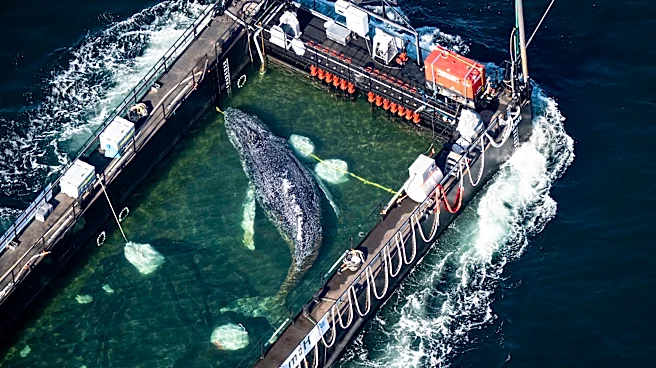
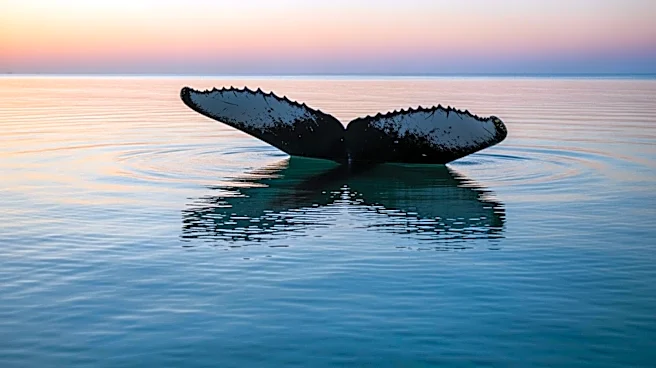
Timmy, a 40-foot-long humpback whale, has been successfully rescued and released into the North Sea after being stranded in shallow waters near Germany for several weeks. The rescue operation, which gained
international attention, was the fifth attempt to return Timmy to deeper waters. The effort was funded by two German millionaires who provided a massive, water-filled barge for the transport. Despite the successful release, experts from the International Whaling Commission (IWC) have expressed concerns about Timmy's health, noting that the whale's prolonged stranding may have caused significant physiological stress. The IWC has been critical of the rescue attempts, suggesting that such interventions can impose additional stress on already compromised animals.
Why It's Important?
The rescue of Timmy highlights the complexities and challenges involved in marine animal conservation efforts. While the successful release is a testament to the technical and logistical capabilities of the rescue team, it also raises questions about the ethical implications of such interventions. The IWC's concerns underscore the potential risks of moving distressed marine animals, which can lead to further health complications. This event draws attention to the need for careful consideration and planning in wildlife rescue operations, balancing the desire to help with the potential for causing additional harm. The outcome of Timmy's release will provide valuable data for future rescue missions, potentially influencing policies and practices in marine conservation.
What's Next?
Following Timmy's release, the IWC will monitor the whale's progress using data from a transmitter attached before the release. This data will be crucial in assessing Timmy's ability to recover and adapt to the wild, providing insights into the effectiveness of such rescue operations. The IWC has emphasized that the release is just the beginning of Timmy's recovery process, which will depend on the whale's ability to resume normal feeding and regain health. The information gathered will help refine future rescue strategies and improve the understanding of the impacts of prolonged stranding on marine mammals.