



What's Happening?
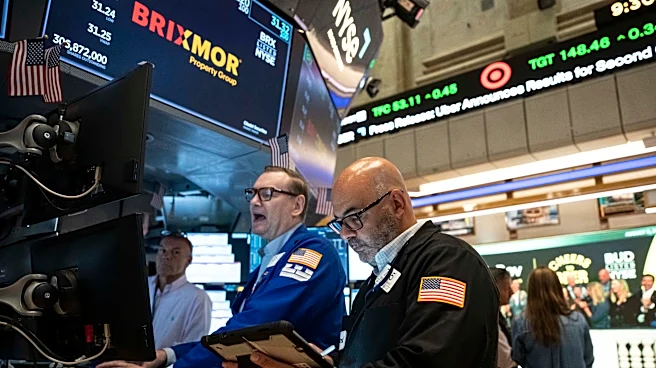
Canadian billionaire and investor Kevin O'Leary has commented on the current state of the U.S. economy, noting a significant disconnect between Wall Street's performance and the financial struggles faced by many American households. Despite a booming
stock market and strong corporate earnings, O'Leary points out that inflation remains a concern, with rates above 3% affecting consumer spending. He emphasizes that energy costs, particularly gasoline prices, could be a decisive factor in the upcoming 2026 elections. O'Leary suggests that reducing oil prices below $70 per barrel could sway voter sentiment and potentially impact congressional control. President Trump has faced criticism over his economic policies, with some lawmakers accusing his administration of favoring the wealthy and exacerbating household expenses. O'Leary also predicts that the fear of China's technological advancements will drive deeper economic integration between the U.S., Canada, and Mexico.
Why It's Important?
The insights provided by Kevin O'Leary highlight the potential influence of energy prices on voter behavior in the 2026 elections. As energy costs are a significant expense for voters across the political spectrum, any changes in these costs could have substantial political ramifications. Additionally, O'Leary's comments on the economic integration of North America in response to China's rise underscore the strategic importance of regional cooperation in maintaining competitive advantages in technology and energy. This could lead to policy shifts and new economic alliances that may reshape trade and economic strategies in the region.
What's Next?
As the 2026 elections approach, political leaders may focus on energy policies to address voter concerns about affordability. This could involve legislative efforts to stabilize or reduce energy prices. Additionally, the potential for increased economic collaboration between the U.S., Canada, and Mexico may lead to new trade agreements or joint initiatives aimed at enhancing regional competitiveness. Stakeholders in the energy and technology sectors will likely monitor these developments closely, as they could impact market dynamics and investment opportunities.