
What's Happening?
Germany is actively exploring the development of a European nuclear deterrent as a response to perceived instability in U.S. security commitments under President Trump's administration. The German government,
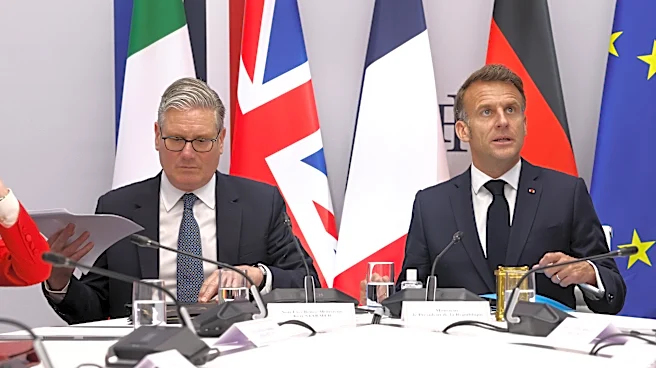
alongside its National Security Council, is assessing options to establish a credible European nuclear deterrence mechanism. This initiative is driven by concerns over the reliability of the U.S. nuclear umbrella, which has been a cornerstone of European security. Germany is engaging in multiple dialogues with France and the United Kingdom, both of which are nuclear powers, to coordinate nuclear strategies. The 'Northwood Declaration' between the U.K. and France has already set a precedent for nuclear coordination. Additionally, Germany has entered into the 'Trinity House Agreement' with the U.K. to further defense cooperation, including nuclear issues. A Franco-German nuclear dialogue has also been established, with plans to expand discussions to include other European NATO members.
Why It's Important?
The exploration of a European nuclear deterrent signifies a significant shift in European defense policy, potentially reducing reliance on the U.S. for nuclear security. This move could alter the balance of power within NATO and reshape transatlantic relations. For Germany, Europe's largest economic power, this initiative underscores its growing role in continental defense. The development of a European deterrent could lead to increased defense spending and strategic autonomy for Europe. However, it also poses challenges, such as the need for consensus among European nations and the potential for political and financial strain. The initiative reflects broader geopolitical shifts and the need for Europe to adapt to changing global security dynamics.
What's Next?
Germany and its European partners are expected to continue dialogues to solidify a European nuclear deterrent strategy. The expansion of these discussions to include more European NATO members is anticipated, potentially leading to a comprehensive European nuclear dialogue. This process will involve building trust and establishing shared objectives among nuclear and non-nuclear states. The inclusion of the U.S. and Canada in these discussions could help maintain transatlantic ties. The initiative may also prompt European nations to reassess their defense budgets and strategic priorities, potentially leading to increased military collaboration and investment.
Beyond the Headlines
The pursuit of a European nuclear deterrent raises ethical and strategic questions about nuclear proliferation and the future of global arms control. It challenges the traditional reliance on U.S. security guarantees and could influence global nuclear policy. The initiative may also impact European unity, as countries navigate differing national interests and historical positions on nuclear weapons. Additionally, the move could provoke reactions from other global powers, influencing international relations and security dynamics.