






What's Happening?
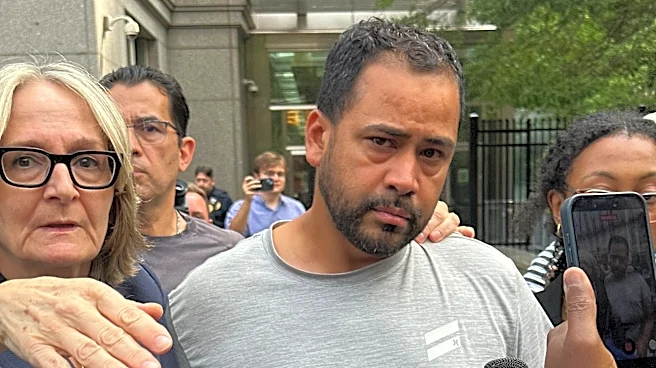
Stephen Schneider, a 64-year-old New Jersey grandfather, has been released from jail following a DUI boating accident that resulted in the deaths of his two grandchildren, Mya Golabek, 9, and Sigmund Paul Golabek, 7. During a recent Ocean County court
hearing, it was revealed that Schneider's blood alcohol content (BAC) was 0.16, which is twice the legal limit of 0.08. Prosecutor Kate Burke argued against his release, emphasizing the severity of his impairment and the tragic outcome. However, Judge Wendel Daniels granted Schneider's release. The accident occurred on July 19 in Barnegat Bay when Schneider's 28-foot Tidewater 280 boat crashed into a wood channel marker, ejecting the children into the water. Despite wearing life vests, both children were found face-down and later died at the hospital. Schneider's lawyer, William Cunningham, stated that his client is deeply affected by the incident and will likely never operate a boat or consume alcohol again. The children's father also wrote a letter pleading for Schneider's release, describing him as a 'wonderful father-in-law' and 'loving grandfather.'
Why It's Important?
This case highlights the devastating consequences of operating a vessel under the influence of alcohol, particularly when it leads to the loss of life, especially children. The revelation of Schneider's BAC at twice the legal limit underscores the significant impairment he experienced, raising critical questions about personal responsibility and the enforcement of boating safety regulations. The judge's decision to release Schneider, despite the prosecutor's objections and the tragic circumstances, brings to light the complexities of the justice system, balancing public safety concerns with considerations for the defendant's personal situation and family pleas. This incident serves as a stark reminder of the dangers of impaired boating and the importance of adhering to safety guidelines to prevent such preventable tragedies. It also sparks a broader conversation about the legal and emotional aftermath for families involved in such heartbreaking events.
What's Next?
Stephen Schneider, who is facing two counts of reckless death by vessel and related charges, is scheduled to return to court on September 15. His legal team plans to investigate details surrounding the accident, including whether the buoy his boat crashed into was lit or unlit, and to seek an independent expert to confirm his BAC. The ongoing legal proceedings will determine the full extent of his culpability and potential sentencing. This case will likely continue to draw public attention, particularly from boating communities and advocates for stricter DUI enforcement. The outcome could influence future judicial decisions in similar cases and potentially lead to increased awareness campaigns regarding responsible boating practices and the dangers of alcohol consumption while operating watercraft. The emotional impact on the family, who are grieving the loss of their children while also supporting the accused grandfather, will remain a central, poignant aspect of this tragedy.
Beyond the Headlines
This incident transcends a typical accident report, delving into profound ethical and emotional complexities. The plea from the children's father for the release of the grandfather, who is responsible for their deaths, illustrates an extraordinary act of forgiveness and the intricate dynamics of family tragedy. It challenges conventional notions of justice, where the desire for retribution often conflicts with the bonds of kinship and shared grief. This case also implicitly raises questions about the adequacy of current boating safety regulations and public awareness campaigns regarding alcohol consumption on waterways. The fact that a retired individual with a seemingly stable background could be involved in such a catastrophic event underscores that impaired operation is not limited to any specific demographic. The long-term psychological impact on all family members, including Schneider himself, will be immense, highlighting the enduring human cost of such preventable actions.