








What's Happening?
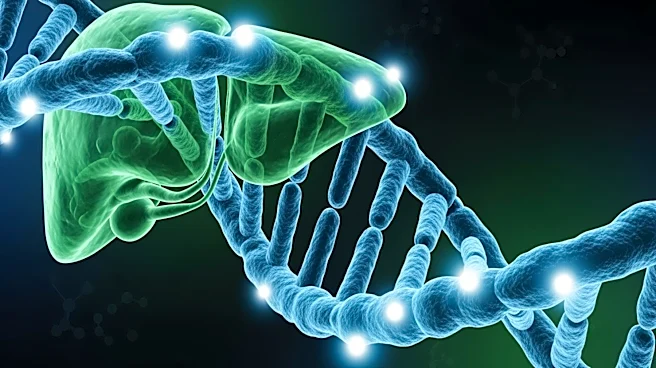
Researchers from the Weizmann Institute of Science, Sheba Medical Center, and the Mayo Clinic have published a study in Nature detailing the first genetic atlas of a healthy human liver. This atlas, created using samples from living liver donors, reveals
a complex division of labor within the liver, identifying eight distinct functional regions. The study highlights differences between human livers and those of other mammals, particularly in glucose storage and metabolic activity. The findings suggest that certain regions of the liver are more susceptible to diseases like fatty liver disease, which is linked to obesity and diabetes.
Why It's Important?
The creation of a detailed genetic atlas of the human liver is significant for medical research and treatment development. By understanding the specific functions and vulnerabilities of different liver regions, scientists can better target therapies for liver diseases. This research could lead to more effective treatments for conditions such as fatty liver disease, which affects a significant portion of the population. Additionally, the approach used to map the liver can be applied to other organs, potentially revolutionizing the understanding of human anatomy and disease mechanisms.
What's Next?
The study opens avenues for developing targeted treatments that address the genetic vulnerabilities of specific liver regions. Researchers may focus on creating therapies that enhance the liver's ability to manage fat accumulation and improve mitochondrial function. The methodology used in this study could be extended to map other human organs, providing insights into their structure and function, and aiding in the development of treatments for various diseases.
Beyond the Headlines
The atlas not only aids in understanding liver diseases but also offers insights into the evolutionary adaptations of the human liver. The unique division of labor in the human liver, compared to other mammals, reflects dietary changes and metabolic demands. This research underscores the importance of considering evolutionary biology in medical studies and highlights the potential for personalized medicine based on genetic mapping.