





What's Happening?
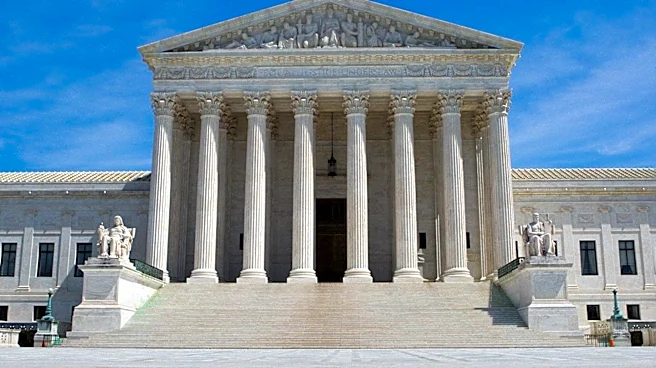
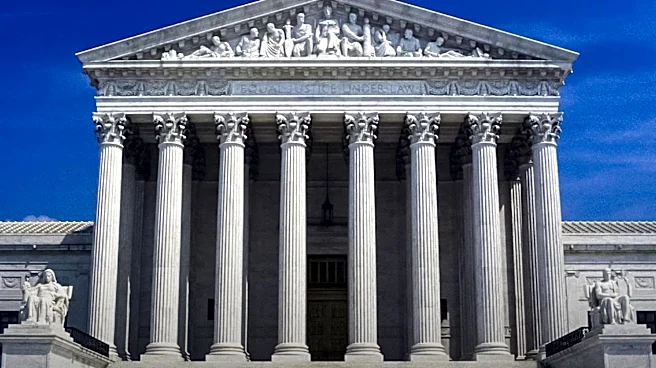
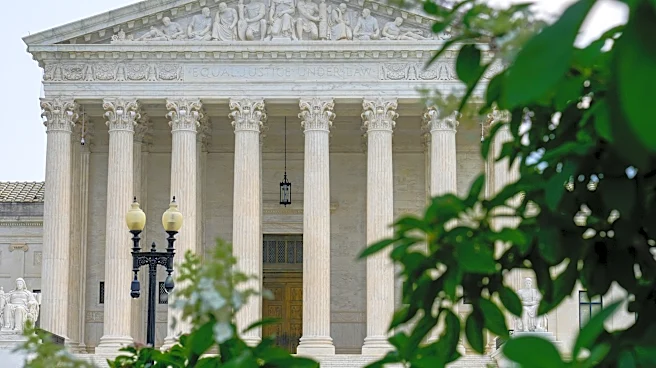
The National Association of Immigration Judges (NAIJ), supported by Columbia University’s Knight First Amendment Institute, has petitioned the Supreme Court for the second time to challenge a 'gag rule' that restricts immigration judges from speaking
publicly about their work or immigration issues. The policy, initially issued in 2017 and revised in 2020 and 2021, broadly prohibits employees from discussing 'agency policies, programs or a subject matter that directly relates to [their] official duties.' NAIJ argues that this rule violates its members' First Amendment rights and creates a 'First Amendment black hole,' preventing judicial review of such sweeping prior restraints on federal employees' speech. The case has a complex legal history, with a district court initially dismissing the suit, and subsequent appeals and reversals between the Fourth Circuit and the Supreme Court.
Why It's Important?
This legal challenge is significant because it addresses fundamental First Amendment rights for federal employees and the public's right to information regarding critical government functions, particularly immigration. NAIJ President Holly D’Andrea asserts that silencing judges not only harms their free speech rights but also 'deprives the public of a key perspective on the rule of law' and a broader understanding of immigration issues. If the 'gag rule' stands, it could set a precedent allowing administrations to impose broad speech restrictions on federal employees without adequate judicial oversight, potentially impacting transparency and accountability across various government agencies. The case also highlights the ongoing tension between government control over employee speech and constitutional protections, especially for those in sensitive judicial roles.
What's Next?
The NAIJ's petition to the Supreme Court seeks a review of the Fourth Circuit's decision, arguing that it creates a circuit split with a previous D.C. Circuit ruling on employee speech restrictions. The Supreme Court will decide whether to hear the case. If the Court agrees to review, its decision could clarify the scope of First Amendment protections for federal employees and the avenues available for challenging such restrictions. A favorable ruling for NAIJ could lead to the dismantling or significant modification of the 'gag rule,' allowing immigration judges to speak more freely. Conversely, if the Supreme Court declines to hear the case or rules against NAIJ, the 'gag rule' could remain in place, further limiting public discourse on immigration from the perspective of those directly involved in the judicial process.
Beyond the Headlines
The 'gag rule' on immigration judges has deeper implications for the integrity and transparency of the U.S. immigration system. By restricting judges from speaking publicly, the policy can obscure critical insights into the functioning of immigration courts, potential systemic issues, and the human impact of immigration policies. This lack of transparency can hinder public understanding, informed debate, and necessary reforms. It also raises ethical questions about judicial independence and the ability of judges to fulfill their roles effectively when their ability to communicate about their work is curtailed. The case underscores the delicate balance between national security interests, administrative efficiency, and fundamental constitutional rights, particularly in areas of high public interest and political sensitivity like immigration.