


What's Happening?
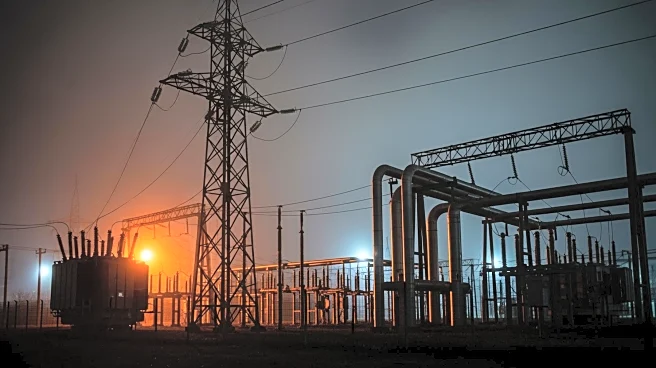
A significant power outage in Berlin, Germany, affected nearly 100,000 people after an alleged arson attack on the city's power supply. The activist group Vulkangruppe claimed responsibility for the attack, which targeted a gas-fired power station in Berlin-Lichterfelde.
The incident resulted in power cuts to approximately 45,000 homes and over 2,000 businesses across four districts. The outage, which lasted several days, disrupted train services and mobile phone networks, and forced hospitals to switch to emergency generators. An 83-year-old woman died during the blackout, and there were reports of burglaries. The German federal prosecutors have opened an investigation into the incident, considering it a terrorist attack by a left-wing extremist organization.
Why It's Important?
The Berlin power outage highlights vulnerabilities in critical infrastructure and raises concerns about the security of energy supplies. The incident underscores the potential impact of extremist actions on public services and safety. It also brings attention to the ongoing debate about the role of fossil fuels and the transition to renewable energy sources. The attack by Vulkangruppe, a group known for targeting critical infrastructure, emphasizes the need for enhanced security measures to protect against similar threats. The incident could influence public policy and energy strategies in Germany and beyond, as governments seek to balance environmental goals with security and reliability of energy supplies.
What's Next?
Authorities are likely to increase security measures around critical infrastructure to prevent future attacks. The investigation by German federal prosecutors may lead to legal actions against those responsible. The incident may prompt discussions on energy policy, particularly regarding the reliance on fossil fuels and the transition to renewable energy. Public and political pressure could mount for more robust measures to safeguard energy infrastructure and address the root causes of such extremist actions. The response to this incident may also influence international cooperation on energy security and counter-terrorism efforts.