



What's Happening?
Russia has canceled its traditional Navy Day parade for the second consecutive year, opting instead for a subdued event featuring large posters of warships. The event took place at the Russian Navy's headquarters in St. Petersburg, where President Vladimir
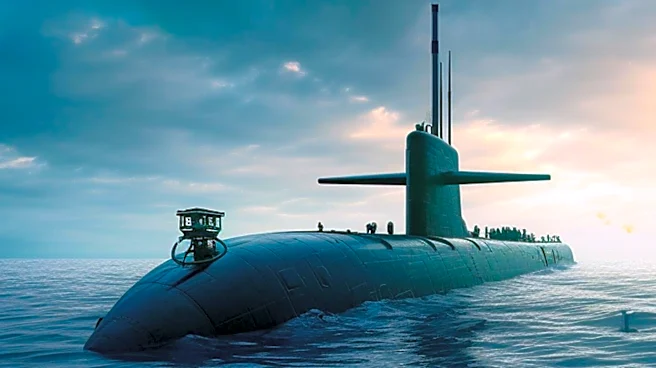
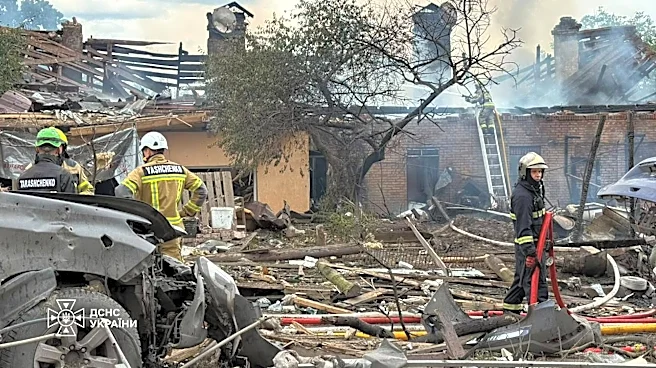
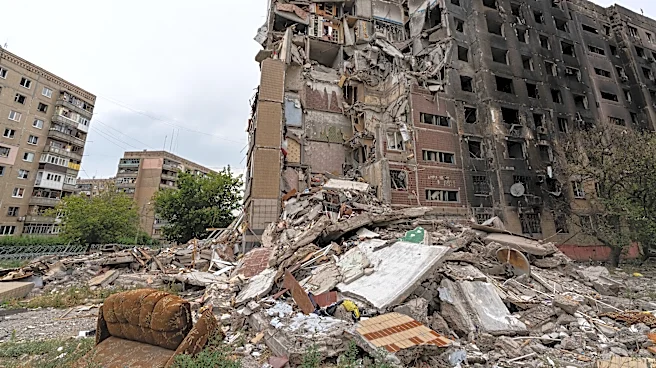
Putin was greeted by two rows of sailors and a small military band. The celebration marked the 330th anniversary of Russia's navy, with a towering poster of the Alexander Nevsky, a Borei-class nuclear-powered missile submarine, prominently displayed. This change in tradition comes in the wake of repeated Ukrainian drone attacks on Russian soil, which have prompted security concerns. In previous years, the Navy Day parade was a grand affair, featuring over 40 warships, four submarines, and 3,000 personnel. However, the ongoing threat from Ukrainian drones has led to a scaled-down version of the event, with the Kremlin citing security reasons for the change.
Why It's Important?
The cancellation of Russia's Navy Day parade underscores the significant impact of Ukrainian drone strikes on Russian security measures. These attacks have forced the Kremlin to concentrate its air defense systems around key areas, including Moscow, to protect against potential threats. The decision to replace the parade with a poster display highlights the ongoing tension between Russia and Ukraine, as well as the strategic challenges faced by the Russian military. The situation also reflects the broader geopolitical dynamics in the region, with Ukraine's evolving military capabilities posing a persistent threat to Russian interests. This development may influence future military and diplomatic strategies, as Russia seeks to address the security challenges posed by its neighbor.
What's Next?
As the security situation remains tense, Russia is likely to continue enhancing its air defense systems to counter the threat of Ukrainian drone strikes. The Kremlin may also explore diplomatic avenues to address the ongoing conflict with Ukraine, although the prospects for a resolution remain uncertain. Additionally, the impact of these security concerns on Russia's military celebrations and public events could lead to further changes in how such occasions are conducted in the future. The international community will be closely monitoring the situation, as any escalation could have broader implications for regional stability and security.