




What's Happening?
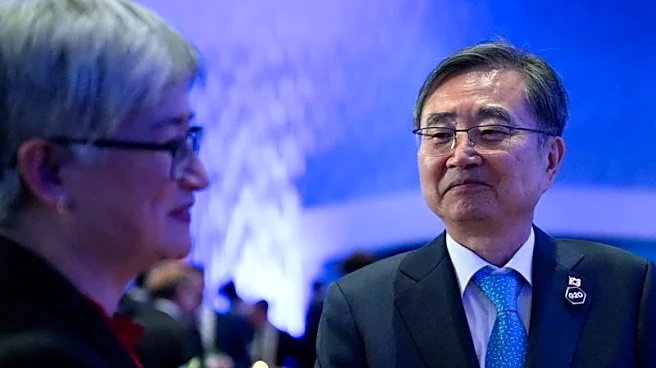
South Korean Foreign Minister Cho Hyun has traveled to China for discussions with his Chinese counterpart, Wang Yi. The agenda for these talks includes the overall state of bilateral relations between South Korea and China, issues concerning the Korean Peninsula,
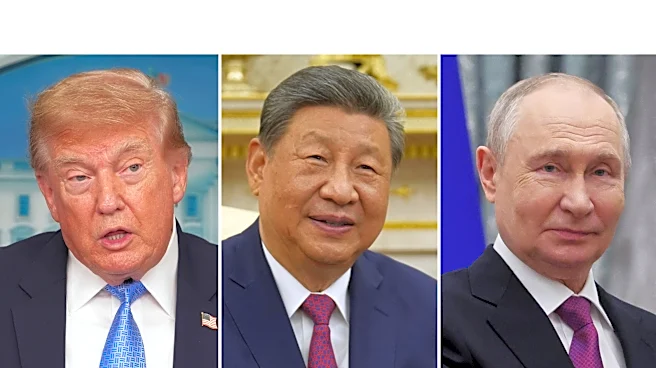
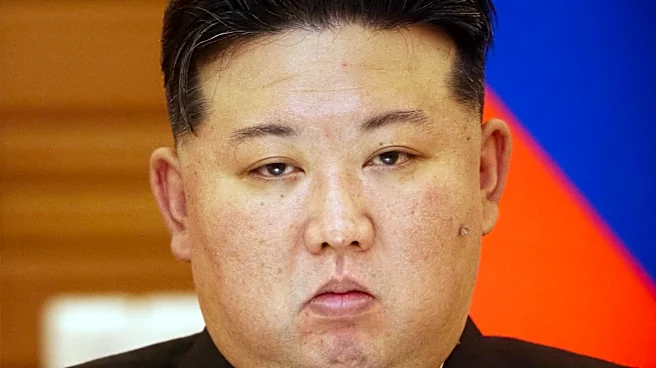
and the prospects for resuming dialogue between the United States and North Korea. Minister Cho's visit precedes the Asia-Pacific Economic Cooperation (APEC) summit, scheduled to take place from Wednesday to Thursday in Shenzhen, China, which South Korean President Lee Jae Myung is expected to attend. The meeting between the foreign ministers is anticipated to lay the groundwork for potential discussions between President Lee Jae Myung and Chinese President Xi Jinping during the APEC summit. While speculation arose about a possible meeting between President Trump and North Korean leader Kim Jong Un during President Trump's trip to Asia, South Korean officials indicate such a meeting on the sidelines of the APEC summit is unlikely, though not ruling out contacts before or after.
Why It's Important?
This diplomatic engagement between South Korea and China is significant for regional stability and international relations, particularly concerning the Korean Peninsula. The discussions aim to address complex geopolitical issues, including the delicate balance of power and the ongoing efforts to denuclearize North Korea. The potential for renewed dialogue between the United States and North Korea, even if indirect, holds considerable weight for global security. Furthermore, the bilateral talks serve to coordinate positions ahead of the APEC summit, an important economic forum that influences trade and cooperation across the Asia-Pacific region. The outcomes of these discussions could impact economic and cultural exchanges, as well as cooperation in regional structures, affecting various stakeholders in the U.S. and beyond who have vested interests in the stability and prosperity of East Asia.
What's Next?
Following the bilateral talks, Chinese Foreign Minister Wang Yi is scheduled to host a dinner for Minister Cho. The primary immediate next step is the APEC summit in Shenzhen, where South Korean President Lee Jae Myung is expected to attend. The groundwork laid by the foreign ministers' meeting could facilitate a potential meeting between President Lee Jae Myung and Chinese President Xi Jinping. While a meeting between President Trump and North Korean leader Kim Jong Un at the APEC summit is deemed unlikely by South Korean officials, the possibility of contacts before or after the summit remains open. Diplomats will also continue to consider economic and cultural exchanges and cooperation in Chinese structures in the Yellow Sea. China's Foreign Ministry has expressed its readiness to work with Seoul to implement agreements reached by the leaders of both countries, suggesting ongoing diplomatic efforts.
Beyond the Headlines
The discussions extend beyond immediate diplomatic exchanges, touching upon the broader strategic interests of the U.S. in East Asia. The potential for U.S.-North Korea dialogue, even if indirect, underscores the persistent challenges of denuclearization and regional security. China's role as a key player in these discussions highlights its growing influence in international affairs and its capacity to mediate or facilitate complex negotiations. The emphasis on economic and cultural exchanges also points to the deeper interconnectedness of these nations, where political stability often underpins economic prosperity. The ongoing efforts to foster dialogue and cooperation, despite historical tensions and differing geopolitical agendas, reflect a pragmatic approach to managing regional complexities and preventing escalation, which has long-term implications for global peace and trade.