







What's Happening?
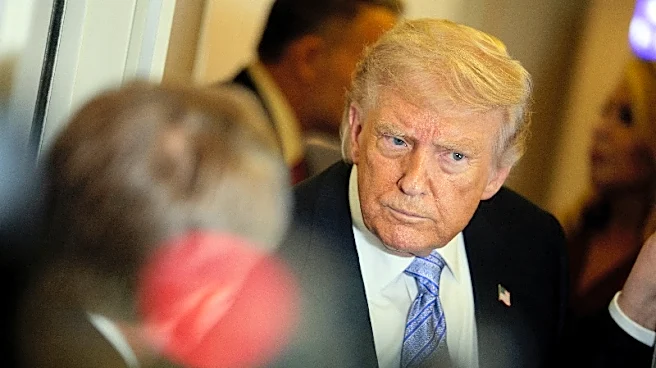
President Trump's administration has been noted for its departure from traditional U.S. diplomatic practices concerning human rights, particularly in its dealings with China. Historically, U.S. presidents have used diplomatic engagements with China to address
human rights issues, such as religious freedoms and the treatment of ethnic minorities. However, under President Trump, there has been a noticeable reduction in the emphasis on human rights in dialogues with China. This shift comes amid reports of severe human rights abuses in China, including the detention of up to one million Uyghurs and other minorities in Xinjiang. Despite these concerns, President Trump has maintained a cordial relationship with Chinese President Xi Jinping, often praising his leadership. This approach contrasts with previous administrations that publicly supported Chinese civil society and human rights activists.
Why It's Important?
The change in the U.S. stance on human rights under President Trump has significant implications for international diplomacy and human rights advocacy. By deprioritizing human rights in discussions with China, the U.S. risks losing its influence as a global advocate for human rights. This shift may embolden other nations to follow suit, potentially leading to a global decline in human rights advocacy. Additionally, the lack of U.S. pressure on China could result in further deterioration of human rights conditions within the country, affecting millions of people. The U.S.'s retreat from its traditional role could also impact its relationships with allies who prioritize human rights, potentially leading to diplomatic tensions.
What's Next?
The future of U.S.-China relations concerning human rights remains uncertain. While President Trump has indicated that human rights were discussed in recent talks with President Xi, the specifics and outcomes of these discussions are unclear. The international community will likely continue to monitor the situation closely, with human rights organizations advocating for increased pressure on China. The U.S. may face calls from both domestic and international actors to reassert its commitment to human rights, potentially influencing future diplomatic strategies. The response from China and its willingness to engage on human rights issues will also be a critical factor in shaping the trajectory of bilateral relations.