

What's Happening?
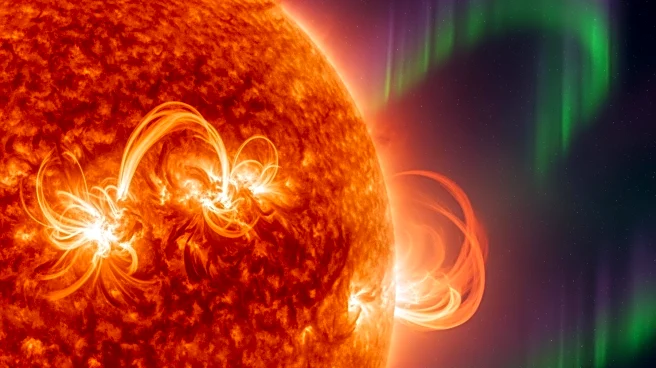
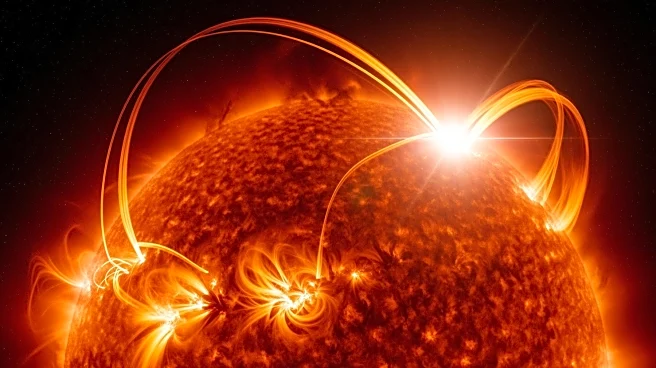
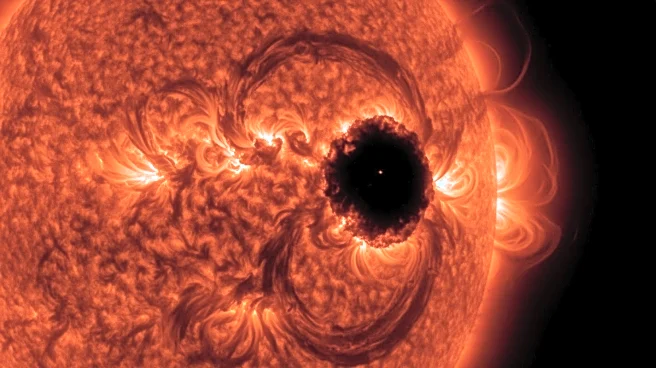
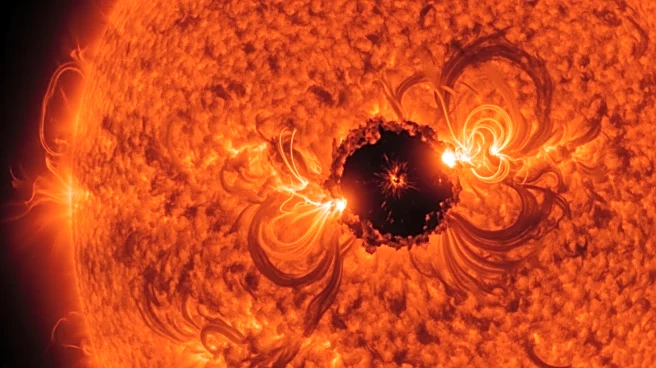
A team of researchers has observed an unusually intense solar region, NOAA 13664, over a 94-day period, marking the strongest geomagnetic storms Earth has experienced in over two decades. This solar activity disrupted satellites, agricultural systems,
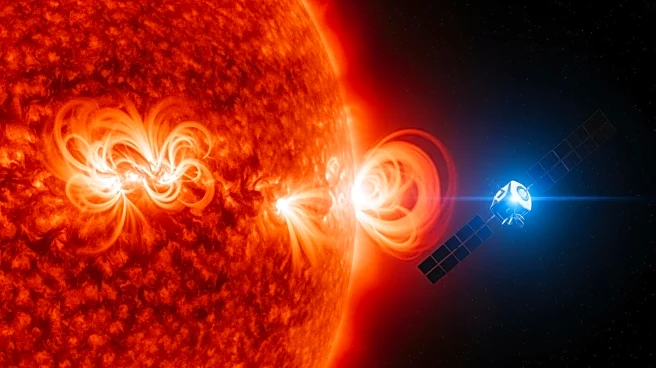
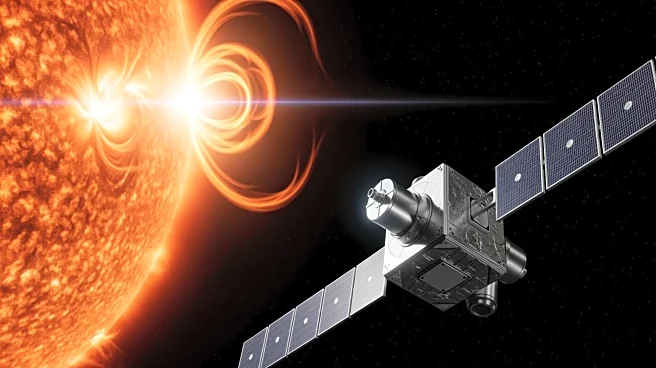
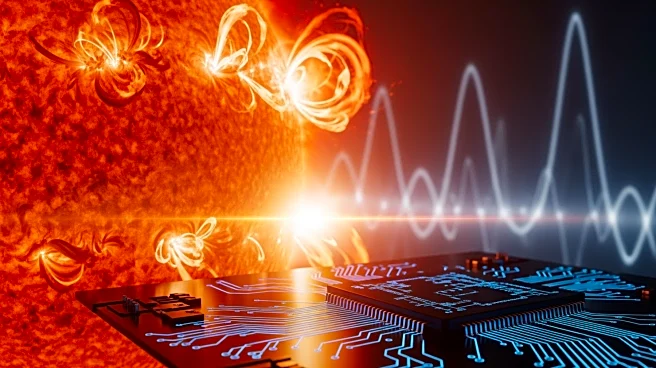
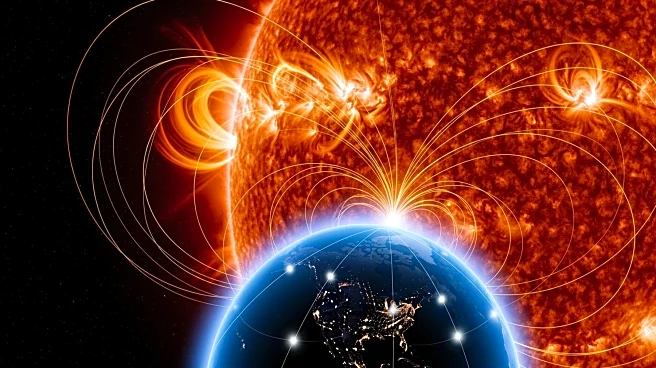
and railway signals. The study utilized data from the European Space Agency’s Solar Orbiter and NASA’s Solar Dynamics Observatory, providing a comprehensive view of the solar region's evolution. The solar storms caused by NOAA 13664 led to significant technological disruptions, including interference with satellite signals used in digital agriculture, resulting in delays and crop losses. Railway signal systems were also affected, demonstrating the impact of space weather on terrestrial infrastructure.
Why It's Important?
The disruptions caused by NOAA 13664 underscore the vulnerability of modern technology to solar activity. As digital agriculture and other sectors increasingly rely on satellite technology, the potential for significant economic and operational impacts grows. The incident highlights the need for improved space weather forecasting and resilience planning to mitigate the effects of such solar events. The study's findings emphasize the importance of understanding solar weather mechanics to protect critical infrastructure and maintain technological stability. The event serves as a reminder of the interconnectedness of space and terrestrial systems and the potential risks posed by solar activity.
What's Next?
The research provides a valuable dataset for further study of solar weather mechanics, which could lead to better predictive models for solar storms. This could enhance preparedness and response strategies for future solar events. Stakeholders in technology-dependent sectors may need to invest in more robust systems to withstand such disruptions. Additionally, the findings could prompt policymakers to prioritize space weather monitoring and develop comprehensive strategies to safeguard critical infrastructure against solar-induced disruptions.
Beyond the Headlines
The study of NOAA 13664 offers insights into the complex magnetic fields of solar regions and their potential to release energy as solar storms. This research contributes to a deeper understanding of solar dynamics and the long-term implications for space weather forecasting. The event also raises questions about the resilience of aging infrastructure and the need for modernization to cope with space weather challenges. As reliance on technology grows, the importance of integrating space weather considerations into infrastructure planning and development becomes increasingly apparent.