







What's Happening?
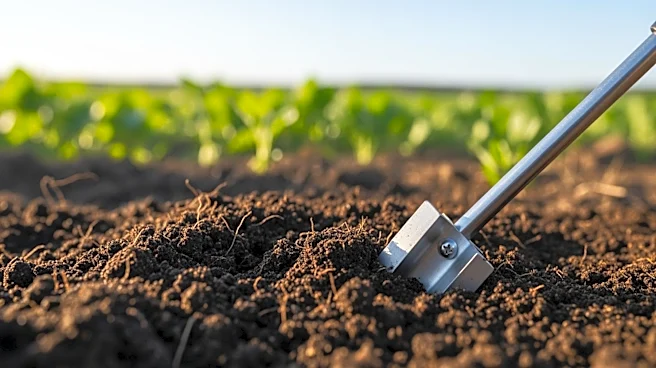
The Iowa Department of Agriculture, in collaboration with the Iowa Nutrient Research & Education Council, has announced a new initiative offering free nitrogen soil testing to farmers upstream from Des Moines. This program aims to help farmers manage
nitrogen levels more effectively, potentially saving costs and improving water quality. The initiative comes at a time when Iowa cities are grappling with high nitrate levels in drinking water sources, and farmers are facing increased fertilizer prices due to geopolitical tensions affecting global supply chains. The program is part of a broader strategy to reduce nitrogen and phosphorus levels, which contribute to environmental issues such as the dead zone in the Gulf of Mexico.
Why It's Important?
This initiative is crucial for both environmental and economic reasons. By providing free soil testing, the program helps farmers optimize fertilizer use, potentially reducing costs and minimizing environmental impact. High nitrate levels in drinking water pose health risks, and this program could contribute to cleaner water sources. Additionally, the geopolitical situation affecting fertilizer prices underscores the need for local solutions to global supply chain disruptions. The program supports Iowa's Nutrient Reduction Strategy, aiming to cut nutrient runoff and improve water quality, which is vital for sustainable agriculture and public health.
What's Next?
As the program rolls out, farmers will begin testing their soil nitrogen levels this spring. The results will inform better nitrogen management practices, potentially leading to reduced fertilizer use and improved crop yields. Stakeholders, including environmental groups and agricultural organizations, are likely to monitor the program's impact on water quality and agricultural productivity. The initiative may also prompt similar programs in other states facing similar challenges, fostering a broader movement towards sustainable agricultural practices.