




What's Happening?
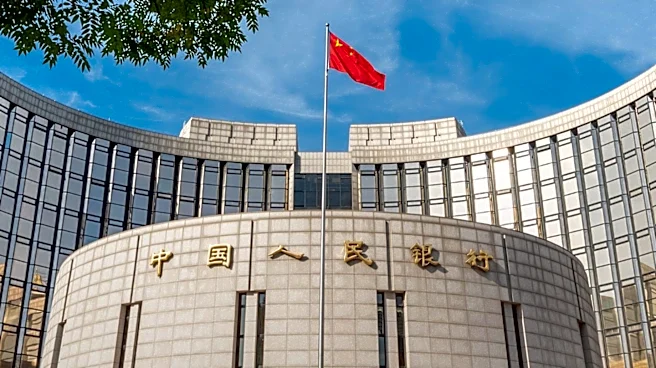
Russia and China are increasingly utilizing a bank netting system, known as the China Track, to settle bilateral trade payments without relying on the SWIFT international payment system or accounts held with Western banks. This mechanism allows export
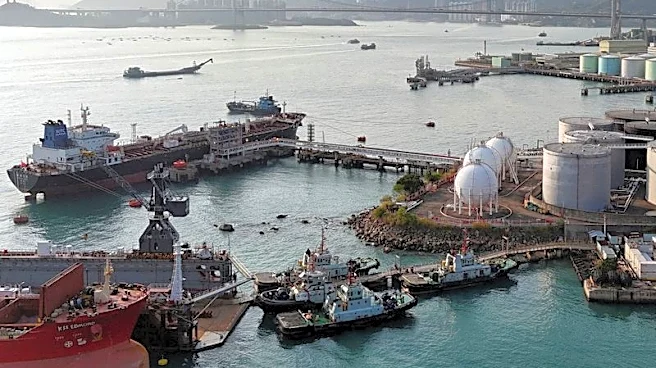
proceeds to finance imports, offsetting obligations between the two countries. For instance, if China purchases $100 million in Russian oil and Russian companies buy $80 million in Chinese machinery, only the remaining $20 million needs to be settled. Russia’s financial watchdog chief, Yury Chikhanchin, explained this arrangement to President Vladimir Putin in July 2025, detailing how exporters can make their proceeds available to importers, with transactions reconciled domestically. This development, reported by Reuters in April 2025, signifies an adaptation of financial infrastructure to circumvent sanctions pressure. Additionally, Russian gold exports to Hong Kong surged in the first seven months of 2026, nearly tripling the volume from the same period in 2025, with much of it subsequently moving to mainland China. This increase coincides with the expanded use of the China Track, suggesting gold may serve as an additional settlement mechanism for residual trade balances.
Why It's Important?
This expanded use of a bank netting system by Russia and China has significant implications for the global financial landscape and U.S. foreign policy. By bypassing SWIFT and Western banking channels, these nations are actively reducing their dependence on financial systems largely controlled by the U.S. and its allies. This move could diminish the effectiveness of financial sanctions as a tool of foreign policy, potentially weakening the U.S.'s ability to exert economic pressure on countries it deems adversarial. For U.S. industries, particularly those involved in international trade and finance, this shift could lead to increased complexity and reduced transparency in global transactions. It also highlights a broader trend of de-dollarization and the emergence of alternative financial architectures, which could challenge the dollar's dominance as the world's reserve currency. The use of gold as a potential settlement asset further complicates the picture, as it offers a tangible, non-fiat alternative for international transactions, potentially undermining the stability of traditional currency-based trade. This development could also encourage other nations to explore similar alternative payment systems, further fragmenting the global financial order.
What's Next?
The continued expansion of the China Track and similar alternative payment systems will likely lead to further discussions and potential policy responses from the U.S. and its allies. Western governments may explore new strategies to maintain the efficacy of their financial sanctions regimes, possibly through enhanced monitoring of non-SWIFT transactions or by targeting entities facilitating these alternative systems. The role of gold in international trade settlement will also be a key area to watch, as its increased use could signal a more profound shift away from traditional financial instruments. Financial institutions and businesses engaged in international trade will need to adapt to these evolving payment landscapes, potentially by diversifying their payment channels or increasing their due diligence on transactions involving Russia and China. Furthermore, this trend could accelerate the development of central bank digital currencies (CBDCs) as nations seek to create more resilient and independent financial infrastructures. The long-term implications for global trade flows, currency valuations, and geopolitical power dynamics will continue to unfold as these alternative systems mature and gain wider adoption.
Beyond the Headlines
The deeper implications of Russia and China's bank netting system extend beyond immediate financial transactions, touching upon fundamental shifts in global power dynamics and the future of international governance. This move represents a strategic effort to create a parallel financial ecosystem, challenging the existing unipolar financial order that has largely been centered around the U.S. dollar and Western institutions. Ethically, it raises questions about the fairness and accessibility of global financial systems, particularly for nations that may feel unfairly targeted by sanctions. Legally, it could lead to new frameworks and regulations as countries attempt to navigate and potentially counter these alternative payment methods. Culturally, it signifies a growing assertiveness from non-Western powers in shaping global norms and institutions. In the long term, this development could contribute to a more multipolar world, where economic influence is distributed among several major blocs, each with its own financial infrastructure. This shift could lead to increased economic competition, but also potentially to greater financial resilience for participating nations, albeit at the cost of reduced global financial integration and increased fragmentation.