





What's Happening?
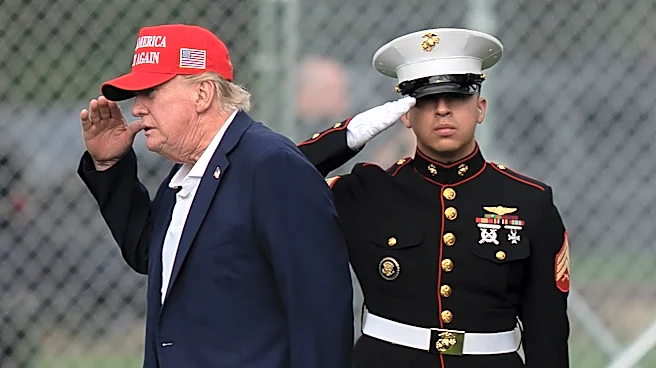
President Trump's administration is signaling a diminishing commitment to NATO, leading to concerns about the alliance's future and potential implications for global security. His past statements, including calling NATO 'obsolete' and questioning the value
of defending smaller member states, have created unease among allies. In 2023, Congress passed a law to prevent the president from unilaterally withdrawing from NATO without Senate approval, highlighting the depth of these concerns. Recent actions, such as a 'six-month review' of U.S. military commitments to Europe and a 'loyalty test' sent to NATO members, further underscore a shift in U.S. policy. These developments are occurring as Russia continues its war in Ukraine and intelligence reports warn of potential 'limited incursions' against NATO members, which could be emboldened by perceived U.S. disengagement. The U.S. is also engaged in a costly war with Iran, further diverting attention and resources.
Why It's Important?
The potential weakening of the U.S. commitment to NATO has significant implications for global security and the balance of power. NATO's collective defense mechanism, particularly Article 5, relies heavily on the U.S.'s willingness to defend its allies. A perceived reduction in this commitment could embolden adversaries like Russia, potentially leading to increased aggression or 'limited incursions' against NATO's eastern flank. This shift could force European nations to significantly increase their defense spending and capabilities, potentially leading to a more fragmented security landscape. Furthermore, the U.S.'s focus on the war with Iran and its demands for allies to shoulder more of their defense burden could strain transatlantic relations and undermine the unity of the alliance, impacting coordinated responses to global threats.
What's Next?
The 'six-month review' of U.S. military commitments to Europe, set to conclude in December, will be a critical indicator of future U.S. policy towards NATO. The results of this review, which ties military commitments to defense spending and support for President Trump's economic policies, could lead to further adjustments in U.S. troop presence and resource allocation in Europe. European allies will likely continue to navigate President Trump's demands for increased burden-sharing while simultaneously assessing the reliability of the U.S. security umbrella. The ongoing war in Ukraine and potential Russian actions against NATO members will also test the alliance's resolve and the effectiveness of its deterrence strategies in the face of evolving U.S. foreign policy.
Beyond the Headlines
Beyond the immediate policy shifts, President Trump's approach to NATO raises fundamental questions about the future of multilateral alliances and the U.S.'s role as a global security guarantor. His emphasis on transactional relationships and 'America First' policies challenges the foundational principles of collective security that have underpinned global stability for decades. This could lead to a long-term realignment of international partnerships, with some allies seeking alternative security arrangements or increasing their self-reliance. The ethical implications of potentially abandoning allies or reducing commitments based on financial contributions or political alignment could also erode trust and cooperation on a broader international scale, impacting global efforts to address complex challenges beyond military defense.