





What's Happening?
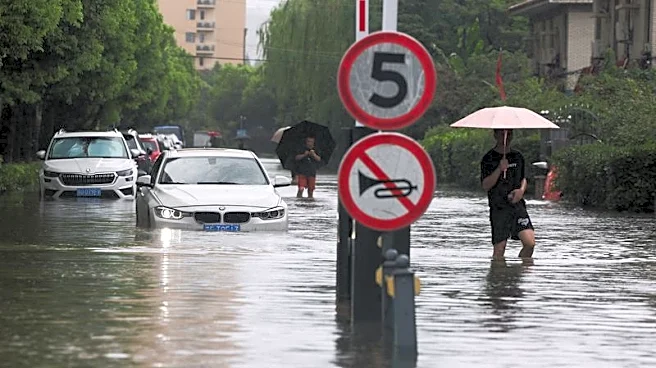
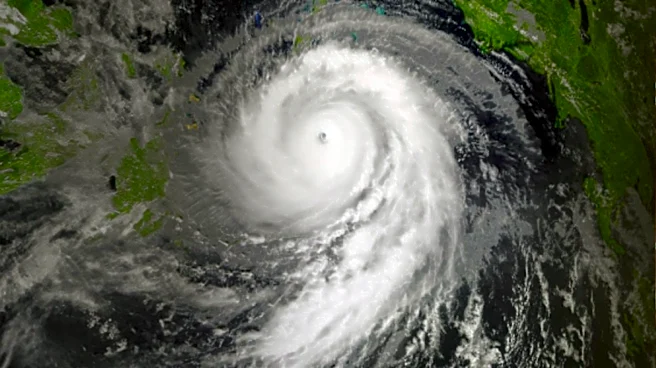
Typhoon Dolphin has prompted the evacuation of over one million people in eastern China, significantly disrupting transportation services. Authorities in Zhejiang and Shanghai evacuated approximately 420,000 people, while over 99,000 were relocated in Fujian
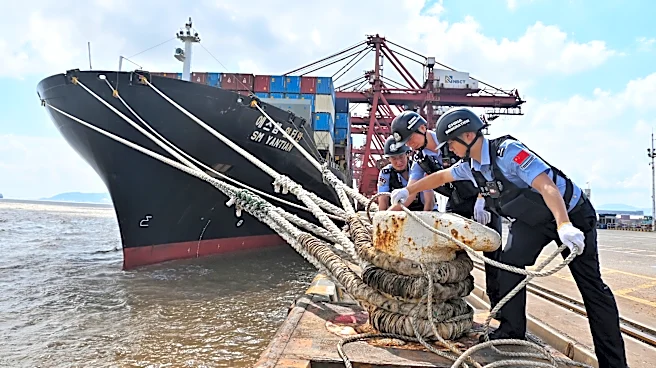
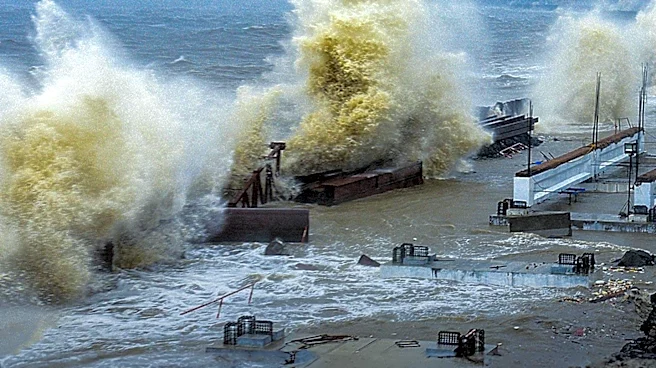
province. The National Meteorological Center issued a red typhoon alert, the highest level of warning, anticipating torrential rain and powerful winds. Shanghai's airports cancelled nearly 1,400 flights, and more than 200 ferry routes were suspended in Zhejiang and Fujian. The typhoon is expected to bring heavy rainfall to central and eastern Zhejiang, northern Fujian, northeastern Jiangxi, central and southern Anhui, and much of Jiangsu through Monday.
Why It's Important?
The impact of Typhoon Dolphin is significant as it affects densely populated regions and major economic hubs in China. The mass evacuations and transportation disruptions highlight the vulnerability of these areas to extreme weather events. The cancellation of flights and suspension of ferry services could have economic repercussions, affecting both local businesses and international trade. Additionally, the typhoon's impact on infrastructure and public safety underscores the need for effective disaster preparedness and response strategies in the face of increasingly frequent and severe weather events.
What's Next?
As Typhoon Dolphin moves inland, it is expected to weaken, but the risk of flooding and landslides remains high. Authorities will likely focus on recovery efforts, including restoring transportation services and providing aid to affected communities. The response to this typhoon may also prompt discussions on improving infrastructure resilience and emergency response systems to better handle future natural disasters.