


What's Happening?
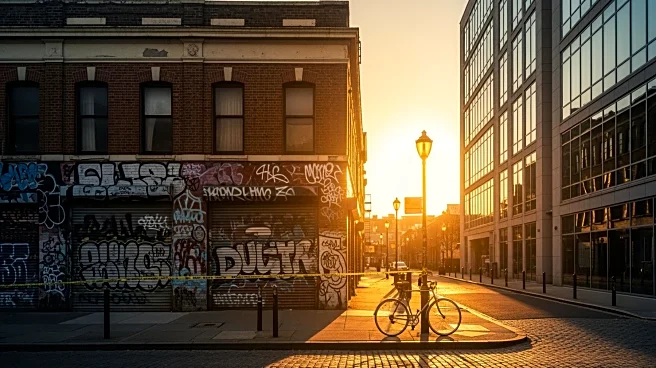
Japonica Brown-Saracino, a professor of sociology, explores the evolving meaning of the term 'gentrification' in a piece for Princeton University Press. Originally coined by Ruth Glass to describe the influx of affluent individuals into working-class
neighborhoods, the term has expanded beyond its academic roots. It now encompasses broader societal changes, including cultural and economic shifts. Brown-Saracino reflects on how gentrification is used in various contexts, from urban development to cultural phenomena like the 'gentrification' of food and festivals. This broader usage highlights the term's adaptability and its role in critiquing social and economic inequalities.
Why It's Important?
The expanded use of 'gentrification' signifies a growing awareness of social and economic disparities. As the term is applied to various contexts, it underscores the pervasive nature of inequality and the displacement of marginalized communities. This broader understanding can influence public discourse and policy, encouraging more comprehensive approaches to urban planning and social justice. The cultural adoption of the term also reflects a shift in how society perceives and discusses issues of class and privilege, potentially leading to greater advocacy for equitable development and resource distribution.
Beyond the Headlines
The transformation of 'gentrification' into a metaphor for various forms of upscaling and displacement suggests a cultural shift in how society addresses change and inequality. This evolution may prompt academics and policymakers to reconsider how they engage with and address these issues. The term's widespread use in media and popular culture indicates its resonance with the public, highlighting the need for inclusive narratives that reflect diverse experiences. As gentrification continues to be a focal point in discussions about urban development and cultural change, it may inspire new frameworks for understanding and addressing systemic inequalities.