








What's Happening?
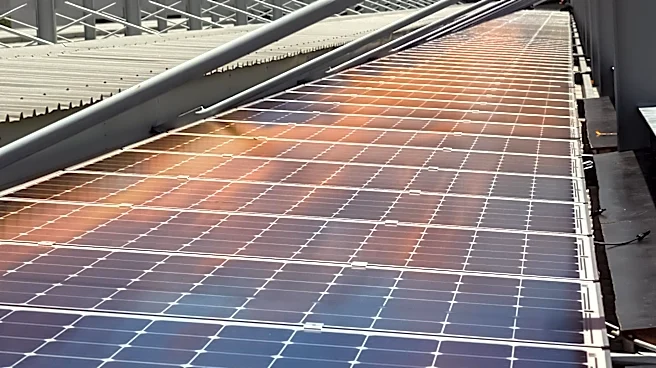
Massachusetts has introduced a new $225 fee for customers installing rooftop solar panels, a measure designed to make the costs of going solar more predictable. This change, finalized by the state's Department of Public Utilities (DPU), aims to prevent
individual solar customers from being hit with unexpectedly high 'interconnection fees' that previously covered the cost of upgrading local grid infrastructure. Before this rule, a small percentage of customers whose projects pushed the grid's capacity could face thousands of dollars in unexpected charges. The new 'Common System Modification' fee will spread these upgrade costs across all solar customers, applying to solar and battery storage projects up to 25 kilowatts. For Eversource and National Grid customers, this fee covers the first $10,000 in interconnection costs, while for Unitil customers, it covers up to $1,450.
Why It's Important?
This new fee is a significant step towards promoting solar energy adoption in Massachusetts by removing a major financial barrier and uncertainty for homeowners and businesses. The previous system, where a single 'unlucky' customer could bear the entire cost of a grid upgrade benefiting many, was a disincentive for solar installation. By standardizing and distributing these costs, the DPU aims to create a more equitable and transparent process, encouraging more residents to invest in renewable energy. This policy change aligns with broader efforts to transition to clean energy and reduce reliance on fossil fuels, contributing to environmental sustainability and energy independence. It also highlights the role of regulatory bodies in adapting infrastructure and pricing models to support emerging technologies and public policy goals.
What's Next?
The new interconnection fee is expected to be implemented within the next two to three months. Utility companies will provide more information on the updated application process for solar installations. This change is anticipated to streamline the process for new solar customers and potentially increase the rate of rooftop solar adoption across Massachusetts. The DPU and utility providers will monitor the impact of this new fee on solar development and grid stability. Future adjustments or expansions of this policy could occur as the state continues to evolve its renewable energy infrastructure and policies. The success of this model in Massachusetts could also serve as a precedent for other states facing similar challenges in integrating distributed energy resources into their grids.
Beyond the Headlines
The implementation of this new solar interconnection fee touches upon deeper issues of energy equity and infrastructure modernization. By socializing the costs of grid upgrades, Massachusetts is acknowledging that the benefits of renewable energy integration extend beyond individual solar owners to the entire community, including improved grid resilience and reduced carbon emissions. This policy reflects a shift towards a more collective approach to funding energy transitions, moving away from placing disproportionate burdens on early adopters. It also highlights the ongoing challenge of adapting aging utility infrastructure to accommodate decentralized energy sources, requiring innovative regulatory solutions. The debate over who pays for grid upgrades is a critical component of the broader energy transition, with implications for consumer costs, utility business models, and the pace of renewable energy deployment nationwide.