



What's Happening?
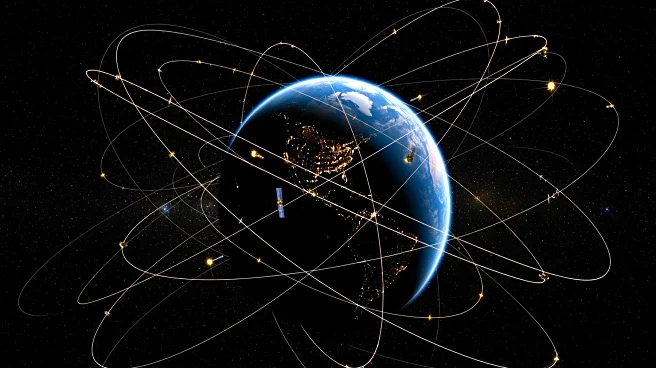
A new study by researchers from Princeton University, the University of British Columbia, and the University of Regina introduces the 'Collision Realization and Significant Harm (CRASH) Clock' to quantify the risk of Kessler syndrome. This phenomenon
involves a cascade of satellite collisions that could create a debris belt around Earth, complicating space exploration. The CRASH Clock measures the time until a catastrophic collision occurs without avoidance maneuvers. The study warns that a major solar storm or similar event could lead to a collision in just 2.8 days, highlighting the urgent need for better orbital management.
Why It's Important?
The increasing number of satellites, particularly from companies like SpaceX, raises the risk of collisions in Earth's orbit. Kessler syndrome poses significant threats to astronauts and future space missions, potentially turning orbit into a hazardous environment. The CRASH Clock provides a metric to assess these risks, emphasizing the need for improved oversight and regulations. The study underscores the importance of addressing space debris and ensuring sustainable space operations to protect both current and future space activities.
Beyond the Headlines
The proliferation of satellites not only increases collision risks but also disrupts astronomical observations and contributes to atmospheric pollution. The study calls for tighter regulations and oversight to mitigate these impacts. As more companies plan to launch satellite constellations, the potential for Kessler syndrome becomes a pressing concern. The research highlights the need for international cooperation and policy development to manage space traffic and ensure the long-term sustainability of space exploration.