







What's Happening?
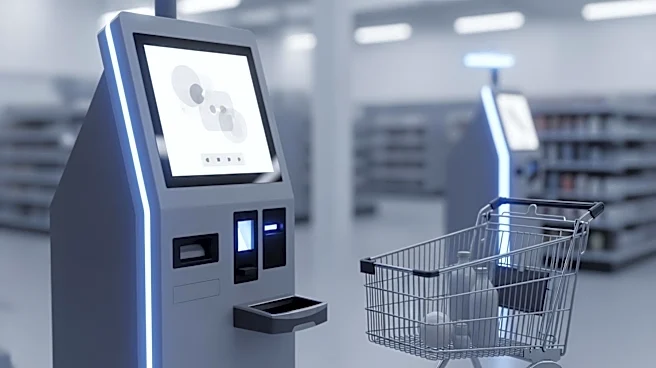
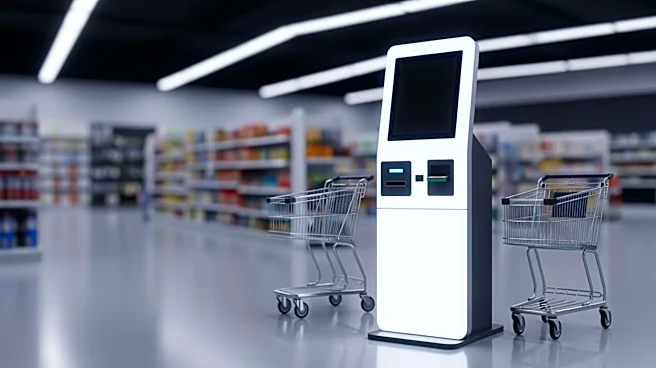
Connecticut lawmakers have decided not to move forward with a bill that would have imposed restrictions on self-checkout machines in stores like Walmart. The proposed legislation aimed to limit the number of self-checkouts to eight per store and required
one staffed checkout for every two self-service machines. The bill faced opposition from industry leaders and some lawmakers who argued it would interfere with business operations and consumer preferences. Despite initial support, the bill failed to gain enough backing and was ultimately shelved. State Sen. Gary Winfield acknowledged the defeat, while State Sen. Julie Kushner suggested that the issue might be revisited in the future.
Why It's Important?
The decision to abandon the bill highlights the ongoing debate over the role of automation in retail. Self-checkouts have become increasingly popular due to their convenience, but they also raise concerns about job displacement and customer service. The bill's failure reflects the challenges lawmakers face in balancing technological advancements with economic and social impacts. For businesses, the decision allows continued flexibility in managing operations and labor costs. However, it also underscores the need for ongoing discussions about the implications of automation on employment and consumer experiences.
What's Next?
Although the bill was shelved, proponents like State Sen. Julie Kushner believe the issue remains significant and may be revisited in future legislative sessions. The debate over self-checkouts is likely to continue as technology evolves and consumer preferences shift. Retailers may need to consider how to integrate automation while addressing concerns about job loss and customer satisfaction. Additionally, lawmakers may explore alternative approaches to regulate the use of self-checkouts without stifling innovation or consumer choice.