






What's Happening?
Educational exchange, historically a cornerstone of public diplomacy and a conduit for cultural understanding between the U.S. and China, is currently experiencing unprecedented strain. At its peak, 372,532 Chinese students were enrolled in American colleges
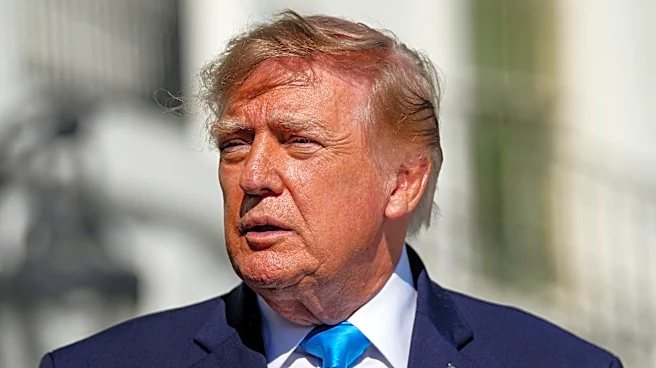
and universities, making them one of the largest international student populations in the U.S. This tradition, which dates back to the 19th century with initiatives like the Chinese Educational Mission in 1872 and the Boxer Rebellion Indemnity Scholarship Program in 1908, has been instrumental in shaping U.S.-China relations. However, recent policy shifts, including efforts by President Trump to restrict international students' access to U.S. universities and expanded online scrutiny of student visa applicants, mark a significant departure from this long-standing practice. These measures are seen as undermining one of America's most effective long-term soft-power tools, potentially ceding ground to rivals like China in global influence.
Why It's Important?
The erosion of educational exchange between the U.S. and China carries significant implications for both nations and global diplomacy. For the U.S., limiting the influx of international students, particularly from China, could diminish the diversity and prestige of American universities, impacting their financial stability and global standing. These students often contribute significantly to research and innovation, especially in STEM fields. From a public diplomacy perspective, reducing educational exchange weakens a crucial soft-power tool that has historically fostered mutual understanding and built long-term relationships. It risks alienating a generation of future leaders who might otherwise have developed a positive view of the U.S. For China, while it has developed its own educational model, the loss of access to American higher education could impact its scientific and technological advancement, though it may also accelerate its efforts to build world-class domestic institutions. The broader consequence is a potential increase in mistrust and misunderstanding between the two global powers, hindering future collaboration on critical international issues.
What's Next?
The future of U.S.-China educational exchange will likely depend on evolving policy decisions from both governments. Universities, like Harvard, have already demonstrated their commitment to international students by challenging restrictive policies, suggesting continued advocacy from academic institutions. The U.S. government may face ongoing pressure to re-evaluate the long-term strategic benefits of educational diplomacy versus short-term security concerns. China, in turn, may continue to strengthen its own higher education system and seek alternative international partnerships for its students. The trend of increased scrutiny and restrictions could lead to a sustained decline in Chinese student enrollment in the U.S., potentially shifting the landscape of international education. This situation could also prompt other countries to increase their efforts to attract international students, particularly from China, thereby altering global academic flows and influence dynamics. The long-term impact on scientific collaboration and cultural ties between the U.S. and China remains a critical area to watch.
Beyond the Headlines
The current strain on U.S.-China educational exchange delves into deeper ethical and strategic considerations. Ethically, restricting access to education based on nationality raises questions about academic freedom and the principle of open intellectual exchange. Strategically, the U.S. risks undermining its own long-term interests by dismantling a proven mechanism for fostering goodwill and influence. The historical context reveals that educational exchange was a 'win-win' strategy, benefiting both nations by accelerating China's scientific capabilities while expanding U.S. soft power. The shift away from this model suggests a re-prioritization of national security concerns over diplomatic engagement, potentially leading to a more insular and less interconnected global academic environment. This could also trigger a broader re-evaluation of the role of international students in national security frameworks, setting precedents for how other countries approach academic collaboration with geopolitical rivals. The long-term cultural impact could be a reduction in cross-cultural understanding and an increase in nationalistic sentiments, making future diplomatic resolutions more challenging.