






What's Happening?
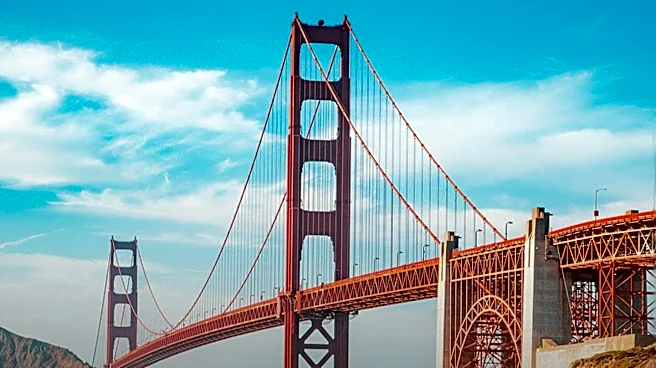
A San Francisco judge has sentenced seven pro-Palestinian activists to 30 days in county jail and six months of probation for their involvement in a 2024 protest that halted traffic on the Golden Gate Bridge for approximately four hours. The San Francisco District
Attorney’s Office dismissed several outstanding charges, including felony conspiracy, after a jury failed to reach a consensus on them in July. Superior Court Judge Teresa Caffese emphasized the importance of accepting legal consequences for civil disobedience, stating that those who disrupted commuters' lives should be prepared for the repercussions of their actions. The defendants were convicted of misdemeanors such as unlawful assembly, obstructing a thoroughfare, and multiple counts of false imprisonment. Defense attorneys argued for home detention, citing personal reasons, but most requests were denied, with one exception for a defendant with a disability.
Why It's Important?
This sentencing highlights the legal boundaries and consequences associated with civil disobedience in the U.S., particularly when protests significantly impact public infrastructure and daily life. The judge's remarks underscore the judicial system's stance on balancing the right to protest with public safety and order. The dismissal of felony conspiracy charges by the District Attorney's Office, despite the jury's deadlock, suggests a consideration of public resources and the proportionality of charges in protest-related cases. This case could influence future protest strategies and law enforcement responses, as it sets a precedent for how authorities and courts handle demonstrations that lead to widespread disruption. It also reflects ongoing tensions surrounding the Israel-Palestine conflict and the methods activists employ to draw attention to their causes within the U.S.
What's Next?
The jail sentences for the seven activists will be stayed pending appeal, indicating that further legal challenges are likely. Defense attorneys anticipate that the actual jail time served could be significantly less than 30 days, potentially amounting to five days in jail and six days in a work program, due to options like the city’s Sheriff’s Work Alternative Program. Each defendant also faces six months of probation and fines and restitution exceeding $1,300. The outcome of the appeals process will further clarify the legal ramifications for similar acts of civil disobedience. This case may also prompt discussions among activist groups about the effectiveness and legal risks of disruptive protest tactics, potentially leading to adjustments in their approaches to advocacy.
Beyond the Headlines
This case delves into the complex interplay between freedom of speech, civil disobedience, and public order. While the judge acknowledged the defendants' commitment to their causes, she underscored that their beliefs do not exempt them from legal accountability for violating laws. The debate over whether the felony charges were politically motivated, as argued by defense attorneys, raises questions about the potential for overcharging in protest cases and its implications for democratic expression. The incident also brings to light the economic impact of such protests, as evidenced by the initial restitution claim for lost bridge tolls and the payments made to individuals for lost wages. This situation reflects a broader societal challenge in defining the acceptable limits of protest and ensuring that both rights and responsibilities are upheld.