








What's Happening?
A company owned by Florida Representative Brian Mast, 4M Properties of South Florida LLC, has received a significant agricultural tax credit for a 9.78-acre parcel of land in St. Lucie County. The credit, amounting to $712,631, reduced the property's
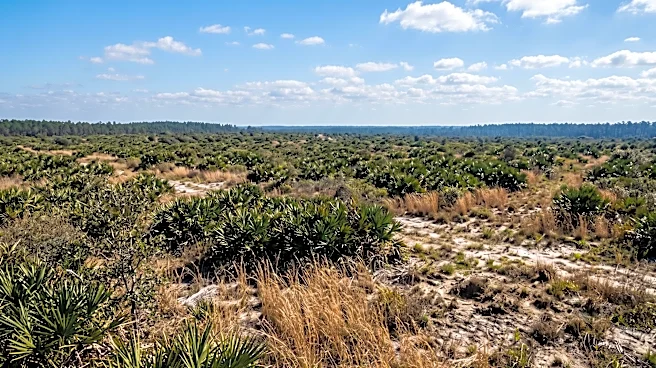
tax bill by over 98%. The state of Florida grants such credits to lands primarily used for bona fide agricultural purposes, explicitly excluding properties used for residential, developmental, or investment purposes. However, property records and photographic evidence suggest the land is undeveloped and not currently utilized for commercial or residential activities. There is no record of any structure on the land since a demolition in 2018. Furthermore, the St. Lucie County parcel was not listed in Mast's annual financial disclosures prior to 2024, and he has not reported any income generated from the land. St. Lucie County claims to inspect the eligibility of all parcels seeking agricultural credits, requiring owners to provide documentation of expenses related to feed, seed, fertilizer, and irrigation.
Why It's Important?
This situation raises questions about the integrity of agricultural tax credit programs and the oversight mechanisms in place to prevent potential misuse. The substantial tax reduction granted to a seemingly undeveloped property could indicate a loophole or a failure in the verification process, potentially leading to significant revenue losses for St. Lucie County and the state of Florida. Such discrepancies can erode public trust in government and tax systems, especially when involving elected officials. For taxpayers, it highlights concerns about fairness and equitable distribution of tax burdens, as some may perceive that certain individuals or entities are benefiting from preferential treatment. The lack of disclosure in financial records also brings into question transparency and accountability for public servants, which are critical for maintaining ethical standards in politics.
What's Next?
Given that Representative Mast is running for re-election in 2026, this issue could become a point of contention in his campaign against Democratic opponent Coast Guard Reserve Lieutenant James Martin. The lack of response from Mast's campaign spokesperson to inquiries about the land and tax credit suggests a potential reluctance to address the matter publicly, which may invite further scrutiny. St. Lucie County's stated policy of inspecting agricultural credit eligibility and requiring documentation of expenses implies that an investigation or review of this specific parcel's status could be initiated. Depending on the findings, there could be calls for repayment of the tax credit, penalties, or reforms to the agricultural tax credit program to prevent similar occurrences in the future. The outcome could influence voter perception and potentially impact the upcoming election.
Beyond the Headlines
The broader implications of this event extend to the ethical responsibilities of elected officials regarding their personal financial dealings and the transparency expected of them. The case underscores the challenge of balancing private business interests with public service, particularly when those interests intersect with government programs designed for specific economic sectors. It also highlights the ongoing debate about tax incentives and their effectiveness, as well as the potential for such programs to be exploited if not rigorously monitored. This incident could prompt a wider examination of agricultural tax credit programs across Florida and potentially other states, leading to calls for stricter enforcement, more robust auditing procedures, and enhanced disclosure requirements for public officials to ensure accountability and prevent conflicts of interest.