








What's Happening?
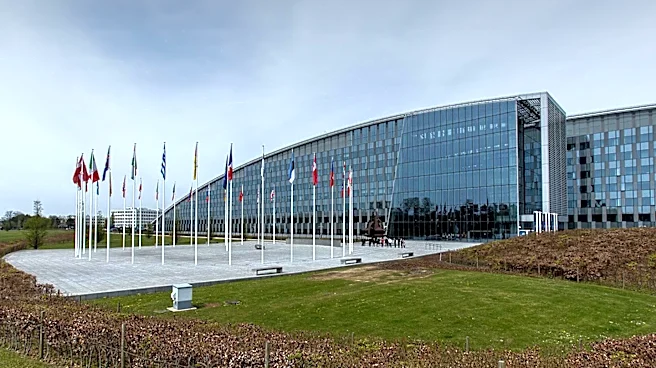
Military leaders from the UK and Sweden, Air Chief Marshal Sir Rich Knighton and General Michael Claesson, have underscored the critical importance of civilian infrastructure for NATO's defense in northern Europe. In a joint article published in The Independent,
they highlighted that the ability to reinforce the region relies heavily on functioning ports, airports, railways, roads, communication networks, energy supplies, and logistics. Their warning comes as Russia's ongoing conflict in Ukraine has demonstrated the necessity of military readiness, robust industrial capacity, and national resilience. The chiefs also cautioned that the systems supporting civilian life are potential targets in modern conflicts, blurring the traditional civil-military divide. This perspective emphasizes that critical infrastructure, supply chains, communication networks, and public confidence are all vulnerable. Sweden's strategic location makes its role in receiving, moving, and sustaining allied forces particularly vital for NATO's defense plans.
Why It's Important?
This emphasis on civilian infrastructure by NATO military chiefs signifies a crucial shift in defense strategy, recognizing that modern warfare extends beyond traditional military engagements. For the U.S. and its allies, this means a broader scope of defense planning that integrates civilian assets and resilience into national security. The vulnerability of critical infrastructure, as demonstrated by the Ukraine conflict, poses significant risks to economic stability and societal function. Disruptions to supply chains, energy grids, or communication networks could severely impede military operations and civilian life, leading to widespread economic and social consequences. This understanding necessitates increased investment in protecting and hardening these civilian systems, potentially leading to new public-private partnerships and policy changes aimed at enhancing national resilience. The U.S. defense industry and related sectors could see increased demand for technologies and services that secure critical infrastructure, from cybersecurity solutions to physical protection measures.
What's Next?
The warnings from these military chiefs are likely to prompt further discussions and policy adjustments within NATO and its member states, including the U.S., regarding national resilience and infrastructure protection. We can anticipate increased focus on joint exercises that simulate attacks on civilian infrastructure and test response mechanisms. There may also be a push for greater intelligence sharing and collaboration between military and civilian agencies to identify and mitigate threats to critical systems. Governments might explore new legislative frameworks to mandate higher security standards for private sector infrastructure operators. Furthermore, there could be an acceleration of efforts to diversify supply chains and reduce reliance on potentially vulnerable foreign sources for essential goods and services, impacting global trade and manufacturing strategies. The U.S. will likely review its own critical infrastructure vulnerabilities and invest in upgrades and protective measures.
Beyond the Headlines
The integration of civilian infrastructure into military defense strategy highlights a profound shift in the concept of national security, moving beyond purely military capabilities to encompass societal resilience. This perspective raises ethical and legal questions about the targeting of civilian assets in conflict and the responsibilities of governments to protect their populations and essential services. It also underscores the long-term implications of geopolitical tensions on everyday life, as the lines between civilian and military domains become increasingly blurred. The need for robust civilian infrastructure also points to the importance of international cooperation in safeguarding global supply chains and communication networks, as disruptions in one region can have cascading effects worldwide. This broader understanding of defense could lead to a re-evaluation of national priorities, with greater emphasis on infrastructure development, cybersecurity, and public preparedness as integral components of national security.