







What's Happening?
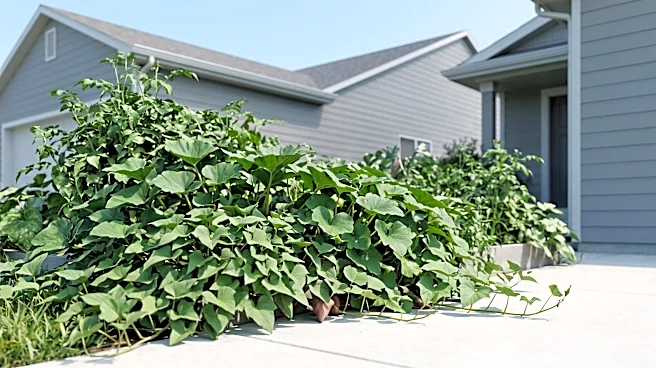
Michael Sherman, a resident of Chino, California, has been fined by the City of Chino for maintaining a lush edible garden in his front yard. The city has declared his garden a nuisance, issuing a $750 fine in April and another $500 fine last month for 'overgrown
vegetation.' Sherman, a landscape contractor, uses his garden to grow a variety of fruits and vegetables, including sweet potatoes, squash, bananas, and plums, to feed his family. He began cultivating the garden in 2019 due to concerns about potential food shortages. While Sherman claims most neighbors support his efforts, one neighbor expressed concerns about the property attracting rats. The city spokesperson stated that violations will continue until Sherman removes or trims the remaining overgrown vegetation, despite Sherman's assertion that he has complied with many demands and that the city has not specified which plants are problematic.
Why It's Important?
This situation highlights a growing tension between individual property rights, particularly the right to grow food, and municipal zoning ordinances or nuisance laws. For U.S. society, it raises questions about food sovereignty, self-sufficiency, and the aesthetic standards enforced by local governments. As interest in home gardening and local food production increases, such conflicts could become more common. The case also touches on environmental concerns, as some argue that well-maintained edible gardens can contribute to local ecosystems and reduce reliance on industrial food systems, while others prioritize traditional landscaping and pest control. The fines imposed on Sherman could deter other residents from establishing similar gardens, potentially limiting efforts towards urban agriculture and community resilience in food supply. It also underscores the need for clearer communication and potentially more flexible ordinances from city authorities regarding diverse landscaping practices.
What's Next?
Michael Sherman faces the possibility of additional fines if he does not comply with the City of Chino's mandate to cut back his edible landscape. He has expressed frustration, stating he doesn't trust the system and believes people should be able to grow what they want as long as it doesn't directly affect neighbors or create health and safety problems. The city spokesperson indicated that violations will persist until the overgrown vegetation is removed or trimmed. This situation could escalate into a legal challenge, potentially setting a precedent for similar cases in other U.S. municipalities. It may also prompt discussions within the Chino community and other cities about updating or clarifying zoning laws to accommodate urban agriculture and edible landscaping, balancing property owner rights with community standards and public health concerns. Advocacy groups for food sovereignty and urban gardening may become involved to support Sherman's cause.
Beyond the Headlines
Beyond the immediate dispute, this incident reflects a broader cultural and philosophical debate about the role of private property in public spaces and the definition of 'nuisance.' Historically, front yards have been viewed as aesthetic contributions to a neighborhood, often governed by strict homeowner association rules or municipal codes. However, the rise of food insecurity concerns, environmental awareness, and a desire for healthier, locally sourced food is challenging these traditional views. The conflict also touches upon the 'right to farm' movement, which typically applies to agricultural operations but could extend to urban settings. This case could spark conversations about the need for cities to adapt their regulations to support sustainable practices like urban farming, potentially leading to new ordinances that encourage edible landscapes while addressing legitimate concerns like pest control. It also highlights the power dynamics between individual citizens and local government bureaucracy, particularly when interpretations of 'overgrown' or 'nuisance' are subjective.