

What's Happening?
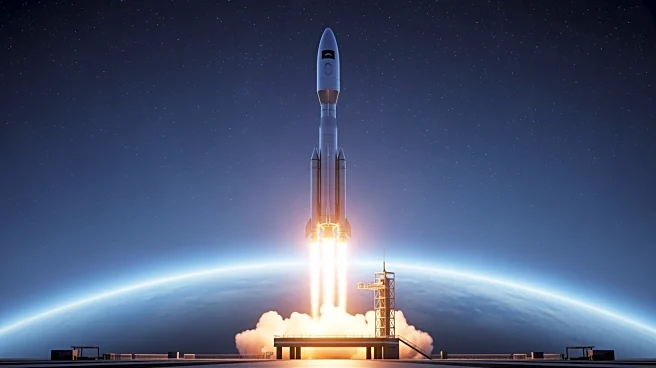
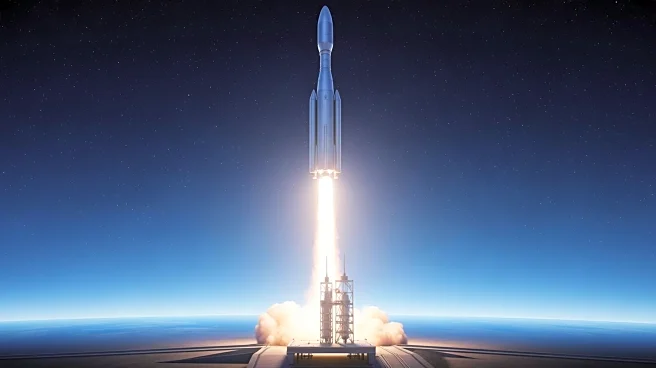
SpaceX successfully launched its 12th long-duration crew mission to the International Space Station (ISS) on February 13, 2026. The mission, known as Crew-12, includes NASA astronauts Jessica Meir and Jack Hathaway, European Space Agency astronaut Sophie
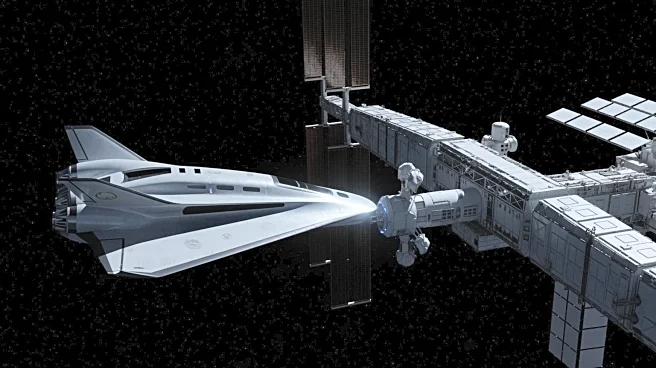
Adenot, and Russian cosmonaut Andrey Fedyaev. The launch took place from Cape Canaveral Space Force Station in Florida using a Falcon 9 rocket. The Crew Dragon capsule, named 'Freedom', is set to dock with the ISS after a 34-hour journey. This mission marks the 12th time NASA has used a SpaceX vehicle for a long-duration ISS mission since 2020. The crew will conduct various scientific experiments, including studies on pneumonia-causing bacteria and plant-microbe interactions, which are crucial for future space missions under NASA's Artemis program.
Why It's Important?
The successful launch of Crew-12 underscores the ongoing collaboration between NASA and SpaceX, highlighting the role of private companies in advancing space exploration. This mission is significant as it continues the tradition of international cooperation in space, involving astronauts from the U.S., Europe, and Russia. The scientific research conducted during this mission aims to enhance our understanding of microgravity's effects on biological processes, which is vital for long-term human space exploration. The findings could lead to advancements in medical treatments on Earth and improve food production in space, supporting future missions to the moon and Mars. The mission also demonstrates the reliability and efficiency of SpaceX's Falcon 9 rocket and Crew Dragon capsule, reinforcing their role in NASA's space exploration strategy.
What's Next?
Upon arrival at the ISS, the Crew-12 team will begin their scheduled scientific and technical research tasks. The mission's outcomes will contribute to NASA's Artemis program, which aims to return humans to the moon and eventually send astronauts to Mars. The Artemis II mission, a test flight around the moon, is planned for launch as early as next month. The success of Crew-12 will likely influence future collaborations between NASA and international space agencies, as well as the continued use of commercial spaceflight services. The mission's results could also impact future policies and funding for space exploration initiatives.