



What's Happening?
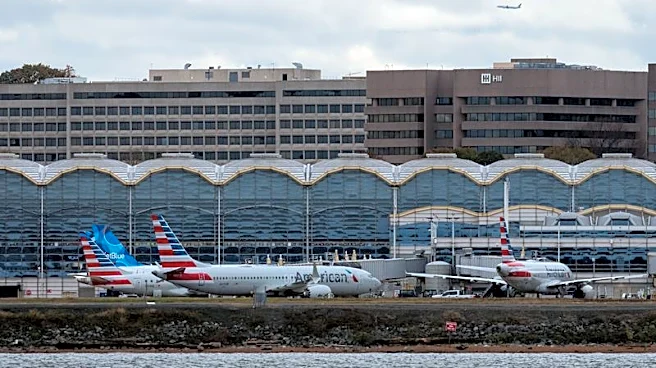
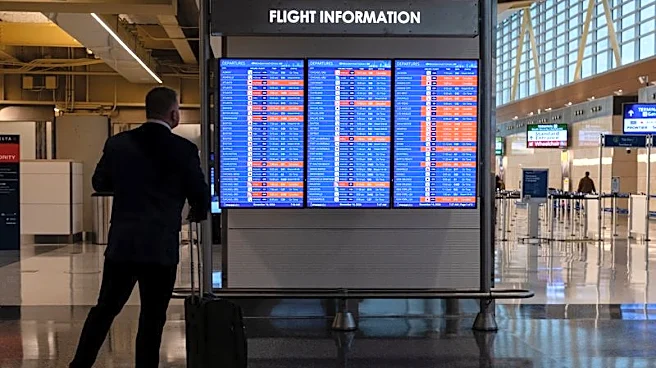
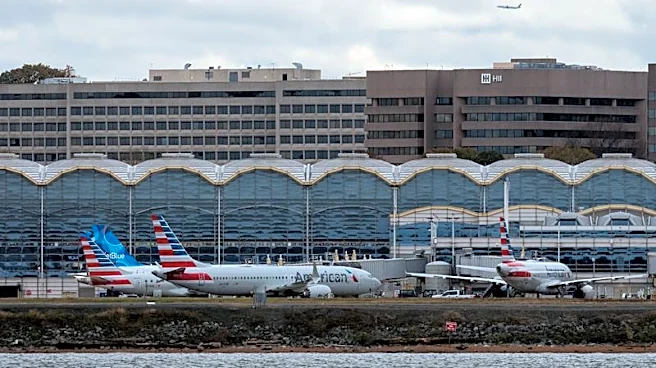
Boston Logan Airport continues to experience significant travel disruptions, including numerous delays and cancellations, days after a nationwide ground stop imposed by the Federal Aviation Administration (FAA) on Friday. The ground stop, which lasted
over four hours, was attributed to a 'telecommunication outage' by the FAA and the White House. While the ground stop was lifted on Friday evening, its ripple effects are still being felt, with FlightAware reporting over 100 cancellations and nearly 130 delays at Logan Airport by Sunday afternoon. Nationwide, more than 19,000 delays and over 2,200 cancellations were reported on Sunday. Passengers at Logan Airport expressed frustration and stress, with many stranded and facing multiple flight changes or cancellations, impacting their ability to reach their destinations.
Why It's Important?
The ongoing disruptions at a major hub like Boston Logan Airport highlight the fragility of the national air travel infrastructure and the cascading impact of even short-lived system failures. Such widespread delays and cancellations not only cause immense inconvenience and financial losses for individual travelers but also have broader economic implications. Businesses reliant on timely travel for meetings, conferences, or supply chain logistics can suffer setbacks. The incident underscores the critical need for robust and resilient telecommunication systems within the FAA to prevent future occurrences that can paralyze air traffic. It also brings into focus the operational challenges faced by airlines in recovering from such events, leading to crew and aircraft displacement that can take days to resolve, affecting thousands of passengers across the country.
What's Next?
The FAA will likely conduct a thorough investigation into the 'telecommunication outage' to identify vulnerabilities and implement corrective measures to prevent future system failures. Airlines will continue working to re-accommodate stranded passengers and normalize their flight schedules, a process that can take several days due to the complex logistics of aircraft and crew rotations. Travelers should anticipate potential lingering delays and cancellations in the coming days, especially if their itineraries involve connections through affected airports. This event may also prompt discussions within Congress and among aviation stakeholders regarding investments in modernizing air traffic control systems and enhancing cybersecurity measures to protect critical infrastructure from similar disruptions.
Beyond the Headlines
Beyond the immediate operational challenges, this incident raises questions about the overall resilience and redundancy of critical national infrastructure. The reliance on complex technological systems for essential services like air travel means that even minor technical glitches can have far-reaching consequences. This event could serve as a catalyst for a broader re-evaluation of infrastructure investment and maintenance, not just in aviation but across various sectors. It also highlights the psychological toll on travelers, who often face uncertainty, stress, and financial burdens due to unforeseen disruptions, underscoring the need for improved communication and passenger support mechanisms during such events. The incident may also fuel public debate on the balance between technological advancement and the need for robust backup systems in critical national services.