
What's Happening?
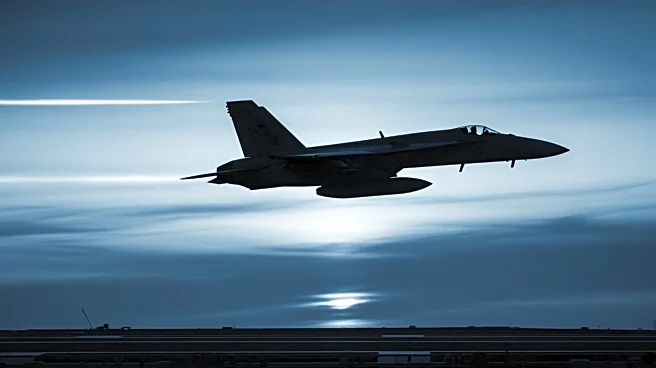
A U.S. fighter jet shot down an Iranian drone as it approached the aircraft carrier USS Abraham Lincoln in the North Arabian Sea. The incident was confirmed by U.S. Central Command, which stated that the drone was aggressively
approaching the carrier with unclear intent. The drone, identified as a Shahed model, is known for its long-range capabilities and ability to carry significant explosives. This event occurred on the same day a U.S.-flagged tanker was harassed by Iranian small boats in the Strait of Hormuz, prompting intervention by a U.S. Navy destroyer and Air Force aircraft. The Iranian craft reportedly threatened to board the tanker, but the situation was de-escalated with U.S. military support.
Why It's Important?
This incident underscores ongoing tensions between the U.S. and Iran, particularly in strategic maritime regions like the Strait of Hormuz. The U.S. military's response highlights its commitment to protecting its assets and personnel in international waters. The presence of U.S. naval forces in the region is a deterrent against potential threats to commercial and military vessels. The situation also reflects broader geopolitical dynamics, as Iran's actions in the region are closely monitored by the international community. The U.S. has reiterated its stance against Iranian provocations, emphasizing the importance of maintaining security and stability in these critical waterways.
What's Next?
Despite the incident, upcoming diplomatic talks between the U.S. and Iran remain scheduled, as confirmed by White House press secretary Karoline Leavitt. The U.S. continues to pursue diplomatic solutions while keeping military options available. Central Command has issued warnings to Iran regarding its naval exercises, urging safe conduct to prevent unnecessary risks. The U.S. military remains vigilant, prepared to respond to any further provocations to ensure the safety of its personnel and assets in the region.