






What's Happening?
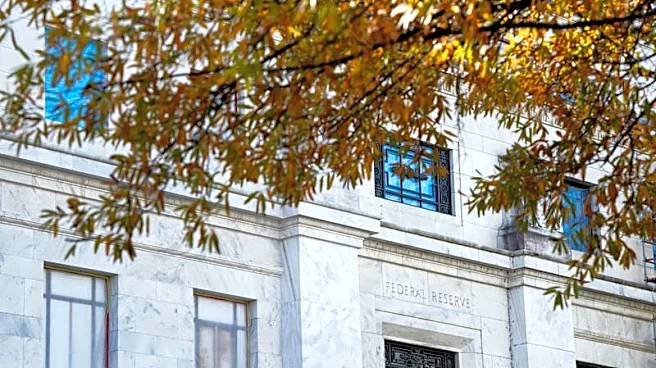
Chicago Federal Reserve President Austan Goolsbee described the October inflation data as 'borderline disturbing' and 'distressing.' The consumer price index (CPI) rose 0.4% on a seasonally adjusted basis in October, exceeding economists' predictions
and marking the third consecutive month of higher-than-expected price increases. Goolsbee expressed concern that drivers of prices, such as tariffs, have not faded as hoped, and highlighted continuously high inflation in services as particularly troubling. He noted that lofty prices are a top concern for businesses, non-profits, and ordinary consumers alike. This report comes at a critical time for the Federal Reserve as it deliberates its next interest rate moves.
Why It's Important?
The strong language used by a prominent Federal Reserve official like Austan Goolsbee underscores the seriousness of the current inflationary environment. His concerns about the persistence of inflation, particularly in services, suggest that the problem is deeply rooted and not easily resolved. If consumers and businesses begin to expect sustained high inflation, it could become a self-fulfilling prophecy, making the process of cooling inflation 'much more painful' for the economy. This situation puts immense pressure on the Federal Reserve to act decisively, potentially leading to more aggressive interest rate hikes. Such actions could impact economic growth, employment, and the financial stability of households and businesses across the U.S.
What's Next?
The October inflation report and the comments from Fed officials, including Goolsbee, strongly suggest that a rate hike at the Federal Reserve's December policy meeting is imminent. While Goolsbee did not specify his preferred course of action, other Fed officials, such as Governor Christopher Waller and Dallas Fed President Lorie Logan, have indicated a willingness to consider more aggressive moves, including a half-point increase. The Federal Open Market Committee (FOMC) will weigh these factors, with the possibility of a larger hike now being seriously considered. The market is already pricing in a high probability of a December rate hike, with some odds for a half-point increase. Goolsbee will become a voting member of the FOMC next year, indicating his views will directly influence future monetary policy decisions.
Beyond the Headlines
Goolsbee's concern that tariffs have not faded as a driver of prices points to the complex interplay of trade policy and inflation. This suggests that geopolitical factors and trade relations can have a lasting impact on domestic price levels, complicating the Federal Reserve's efforts to manage inflation through monetary policy alone. Furthermore, his emphasis on the 'disturbing' nature of the report highlights a potential shift in the Fed's assessment of the inflation problem, moving from a 'transitory' view to a recognition of more entrenched issues. The risk of consumers and businesses beginning to expect hot inflation is a critical psychological factor; if inflation expectations become unanchored, it can lead to a wage-price spiral, making it significantly harder to bring prices back down to target without causing a more severe economic downturn.