
What's Happening?
La Niña has re-emerged in the equatorial Pacific Ocean as of September 2025, following a brief hiatus. This phenomenon, part of the El Niño-Southern Oscillation (ENSO) cycle, is characterized by strengthened
easterly trade winds that enhance the upwelling of cold, deep water in the eastern tropical Pacific. This results in cooler sea surface temperatures and a drop in sea levels in the central and eastern Pacific. The current La Niña event is relatively weak, and its influence on global weather patterns remains uncertain. Data from the Sentinel-6 Michael Freilich satellite, processed by NASA's Jet Propulsion Laboratory, has been used to monitor these changes. The NOAA Climate Prediction Center has confirmed the presence of below-average sea surface temperatures, which are expected to persist for another month or two.
Why It's Important?
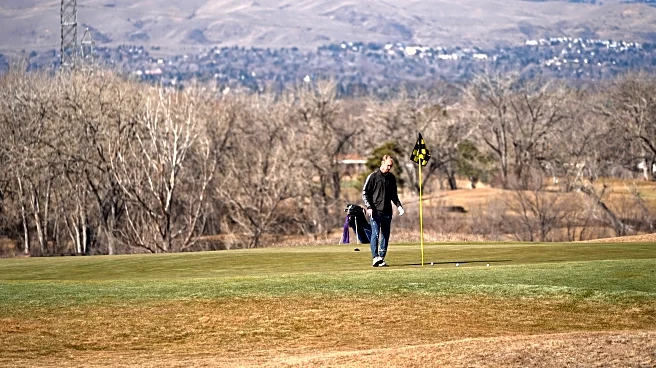
The return of La Niña has significant implications for global weather patterns, particularly in the United States. Typically, La Niña conditions lead to below-average rainfall in the American Southwest and increased precipitation in the Northwest. However, the weak nature of the current event makes weather predictions challenging. The phenomenon affects the exchange of heat and moisture between the ocean and atmosphere, altering atmospheric circulation patterns. This can lead to shifts in mid-latitude jet streams, potentially intensifying rainfall in some regions while causing droughts in others. The ongoing monitoring by NASA and NOAA is crucial for understanding these impacts and preparing for potential weather-related challenges.
What's Next?
The Sentinel-6B satellite, launched in November 2025, is expected to enhance ENSO research and forecasts starting in 2026. As La Niña conditions continue, scientists will closely monitor sea surface temperatures and atmospheric patterns to refine predictions. The potential for La Niña to influence winter weather in the U.S., particularly in the Southwest, remains a focus of study. Stakeholders, including meteorologists and policymakers, will need to consider these developments in their planning and response strategies.