





What's Happening?
The San Diego Unified School District, along with other districts, is expressing serious concern regarding the impact of Temporary Protected Status (TPS) policy changes on vulnerable children and families. The district highlights that these policy shifts
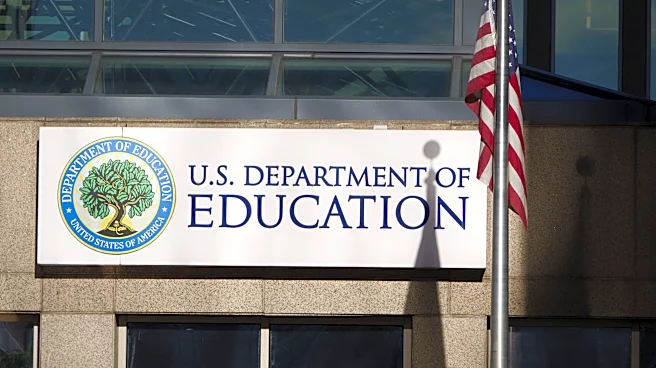
disrupt children's lives, education, and emotional well-being, often leading to academic regression and mental health challenges. A specific case involved an eight-year-old Haitian student from Fay Elementary who was taken into federal custody by an ICE agent, separating him from his family and interrupting his schooling. The district is demanding that the Department of Health and Human Services (DHHS) and the Office of Refugee Resettlement (ORR) change their policies to prioritize children's educational continuity and well-being.
Why It's Important?
This issue is critical because it underscores the profound human impact of immigration policy on children, particularly their access to education and stable environments. The San Diego Unified School District's advocacy highlights a systemic problem where federal policies, intended for immigration enforcement, inadvertently create significant educational and emotional trauma for young individuals. The district's demands for federal agencies to prioritize placement decisions that keep children near their schools, coordinate with local districts, and develop formal protocols are vital for ensuring that children's rights to education are protected. This situation affects not only the children directly involved but also the broader community, as schools are left to manage the resulting trauma and disruption, impacting educational outcomes and social stability.
What's Next?
The San Diego Unified School District is calling on DHHS and ORR to review their concerns and engage with school districts, child welfare experts, educators, and community leaders. The goal is to create child-centered solutions that prioritize educational continuity in placement decisions. This could involve developing new protocols for inter-agency coordination, establishing transportation and enrollment supports, and publicly reporting educational outcomes for affected children. The district's actions may prompt federal agencies to re-evaluate their procedures and consider the long-term consequences of their policies on children's development and educational attainment. Continued advocacy from educational institutions and community groups will be crucial in pushing for these policy changes.
Beyond the Headlines
The situation in San Diego reveals a deeper tension between immigration enforcement and child welfare, raising ethical questions about the state's responsibility to protect children regardless of their immigration status. The disruption of a child's education and family life due to policy changes can have lasting psychological and developmental consequences, potentially creating a generation of individuals with interrupted schooling and unresolved trauma. This issue also highlights the role of local institutions, like school districts, as front-line responders to the human costs of federal policies. It challenges society to consider how to balance national security and immigration control with humanitarian principles and the fundamental rights of children to stability and education.