







What's Happening?
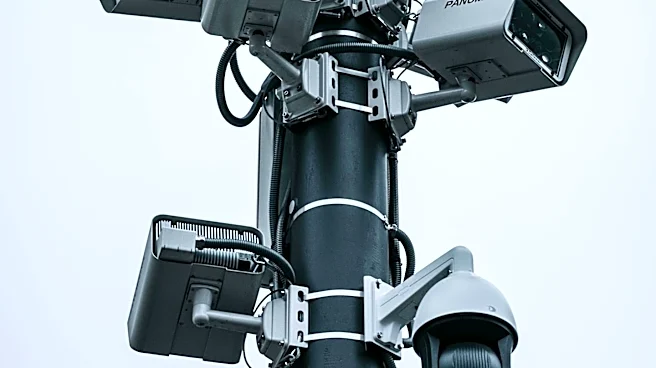
The Fayetteville City Council has unanimously approved an ordinance prohibiting the purchase and use of automatic license plate readers (ALPRs), including those offered by Flock Safety. This decision aligns Fayetteville with other cities nationwide that
have taken similar actions due to privacy and due process concerns associated with these surveillance systems. Councilman Bob Stafford proposed the ordinance as a preemptive measure, emphasizing that good public policy should not rely on the assumption that powerful surveillance systems will always be used appropriately. Although the Fayetteville Police Department currently does not own or intend to acquire ALPRs, the council deemed it crucial to establish a policy addressing their use. The ordinance passed with a 7-0 vote, with Councilwoman Monique Jones absent.
Why It's Important?
This ordinance is significant as it reflects a growing national debate over the balance between public safety and individual privacy rights in the digital age. By proactively banning ALPRs, Fayetteville is taking a stance against potential mass surveillance technologies that can collect and store vast amounts of data on citizens' movements. The concerns raised, such as those related to facial recognition software and data retention, highlight the broader societal implications of advanced surveillance tools. This move could influence other municipalities to consider similar bans or moratoriums, fostering a more cautious approach to adopting technologies that could infringe on civil liberties. It also underscores the role of local government in setting precedents for technology governance and protecting residents from potential overreach.
What's Next?
While the ordinance is currently in effect, Councilman Stafford noted that it is not necessarily permanent and could be amended in the future if issues with surveillance systems are addressed. This suggests ongoing vigilance and potential for re-evaluation as technology evolves and public concerns shift. Other cities may look to Fayetteville's decision as a model for their own policies regarding ALPRs and similar surveillance technologies. The debate surrounding privacy and public safety will likely continue at both local and national levels, potentially leading to further legislative actions or legal challenges concerning the use of such systems by law enforcement and other entities.
Beyond the Headlines
The Fayetteville City Council's decision delves into the deeper ethical and societal implications of pervasive surveillance. Beyond the immediate privacy concerns, the ban touches upon the concept of a 'surveillance society' and the potential for mission creep, where technologies initially intended for specific purposes are later expanded to broader applications. The preemptive nature of the ordinance suggests a forward-thinking approach to governance, aiming to prevent problems before they arise rather than reacting to them. This action could also spark discussions about the democratic oversight of technology adoption, ensuring that communities have a say in how their public spaces are monitored and how their data is collected and used. It highlights the tension between technological advancement and the preservation of fundamental rights in a rapidly digitizing world.