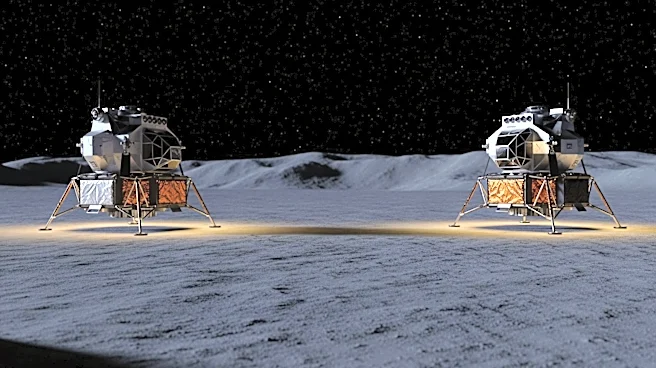










What's Happening?
China has launched the Shenzhou-23 mission, sending three astronauts to the Tiangong space station. For the first time, one astronaut will remain in orbit for an entire year. The mission, which includes the first astronaut from Hong Kong, aims to conduct
over 100 scientific projects, focusing on space life sciences and new technologies. This extended stay is part of China's preparation for a manned lunar landing by 2030. The mission underscores China's growing ambitions in space exploration, following its exclusion from the International Space Station.
Why It's Important?
This mission marks a significant milestone in China's space program, highlighting its capability to sustain long-duration human spaceflight. The research conducted during this mission will provide critical data on the effects of prolonged space exposure on the human body, which is essential for future deep-space missions, including lunar and potential Mars expeditions. China's advancements in space technology could shift the balance in global space exploration, challenging the dominance of the U.S. and its allies.
What's Next?
The selection of the astronaut who will remain in orbit for a year will be determined during the mission. The data collected will inform China's future space missions, including its planned lunar landing by 2030. The mission's success could accelerate China's timeline for establishing a manned lunar base and further its ambitions in space exploration.