

What's Happening?
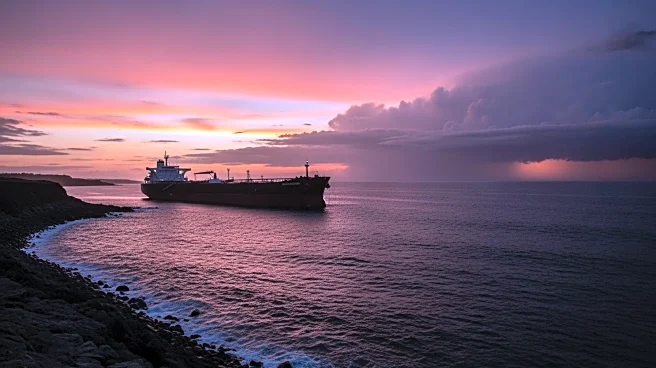
President Trump announced that the United States has seized an oil tanker off the coast of Venezuela, marking a significant escalation in the U.S.'s efforts to pressure Venezuelan President Nicolás Maduro. This action is part of a broader campaign by
the Trump administration to increase military presence in the region, which has included strikes on alleged drug-smuggling operations. The seizure was conducted by the U.S. Coast Guard with support from the Navy, under U.S. law enforcement authority. Venezuela, possessing the world's largest proven oil reserves, has been selling oil at discounted rates to China due to U.S. sanctions. These transactions often involve complex networks of intermediaries and ghost tankers. Maduro, in a speech, did not directly address the seizure but emphasized Venezuela's readiness to defend against U.S. actions.
Why It's Important?
The seizure of the oil tanker highlights the intensifying geopolitical tensions between the U.S. and Venezuela. This move could further strain relations and impact global oil markets, especially given Venezuela's significant oil reserves. The U.S. aims to weaken Maduro's government, which it accuses of narcoterrorism, by disrupting its oil trade. This action may also affect U.S. domestic politics, as the Trump administration faces scrutiny from Congress over its military operations in the region. The situation could lead to increased volatility in oil prices and affect international diplomatic relations, particularly with countries like China that are involved in Venezuelan oil trade.
What's Next?
The U.S. administration may continue to apply pressure on Venezuela through military and economic means. There could be further military actions or sanctions aimed at disrupting Venezuela's oil exports. Congress is likely to continue its scrutiny of the administration's military actions, potentially leading to legislative or judicial challenges. Internationally, countries involved in Venezuelan oil trade, such as China, may respond diplomatically or economically. The situation could also influence U.S. relations with other Latin American countries, depending on their stance on the U.S.'s actions.