



What's Happening?
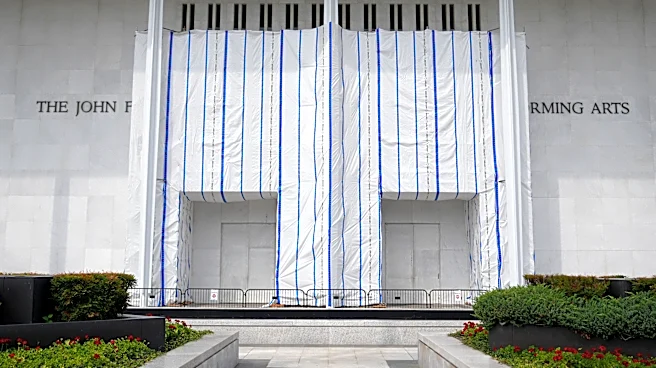
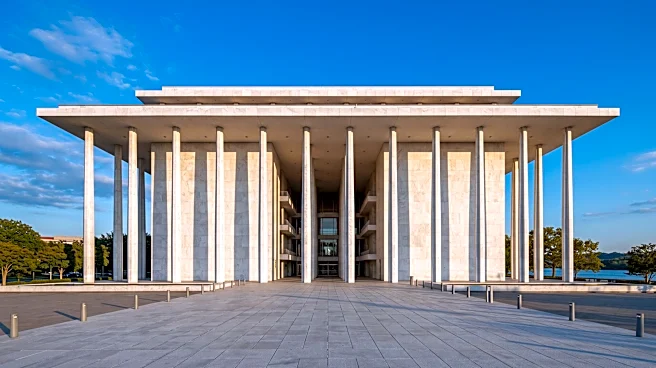
U.S. District Court Judge Christopher Cooper has expressed skepticism regarding the Kennedy Center board's intention to re-inscribe President Trump's name on the historic performing arts venue. This development follows an earlier ruling by Judge Cooper in May,
which deemed the initial addition of President Trump's name illegal and ordered its removal. The Trump-aligned board at the Kennedy Center recently voted to add the inscription, "The John F. Kennedy Center for the Performing Arts Restored and Renovated By President Donald J. Trump," to the facade. Additionally, if the 'Trump Kennedy Center Fund' reaches $100 million, another inscription, "Endowed by the Trump Kennedy Center Fund," would be added, and the plaza would be renamed in President Trump's honor. Commerce Secretary Howard Lutnick, who attended the hearing, has been involved in defending the board's decisions. The administration's lawyer, Brantley Mayers, argued that these moves constitute recognition of President Trump's contributions rather than a renaming of the institution, which was the focus of the earlier legal challenge. The administration has since informed the court that it will not proceed with changes before October 8 to allow Judge Cooper more time to consider the case.
Why It's Important?
This ongoing legal dispute highlights a significant clash between the executive branch's desire to honor President Trump and the judiciary's role in upholding established legal frameworks concerning national institutions. The Kennedy Center, a congressionally established memorial, is at the heart of this conflict, raising questions about the appropriate process for altering such landmarks. The potential for the Kennedy Center to be demolished, as suggested by administration lawyers in a court filing if funding for renovations is not secured, adds a layer of urgency and controversy to the situation. This threat, which Commerce Secretary Howard Lutnick downplayed, underscores the high stakes involved. The case also reflects broader political tensions, with Representative Joyce Beatty leading efforts to block President Trump's influence on the institution. The outcome will set a precedent for how future administrations can interact with and potentially modify national cultural institutions, impacting their historical integrity and public perception.
What's Next?
The administration has agreed to delay any changes to the Kennedy Center until at least October 8, providing Judge Cooper additional time to deliberate on the case. Judge Cooper will need to determine if he has the jurisdiction to block the proposed inscriptions, especially given that the administration is appealing his earlier ruling. A key point of contention will be whether the new proposed inscriptions constitute a renaming of the institution, which Judge Cooper previously ruled only Congress could authorize, or merely a recognition of President Trump's contributions, as argued by the administration. The legal team for Representative Joyce Beatty will likely continue to argue that the board's actions are an attempt to circumvent the previous court decision. The resolution of this case could influence future decisions regarding the naming and recognition of individuals on national monuments and institutions, potentially leading to further legislative or judicial actions to clarify such processes.
Beyond the Headlines
The dispute over the Kennedy Center's naming rights extends beyond a simple legal battle; it delves into the cultural and historical preservation of national institutions. The suggestion by administration lawyers that the Kennedy Center could face demolition if renovations are not funded, despite Commerce Secretary Howard Lutnick's reassurances, raises ethical questions about using the threat of structural decay as leverage in political and legal disputes. This situation could set a dangerous precedent where the maintenance and future of national treasures become entangled with political agendas. It also highlights the ongoing debate about how historical figures and their legacies are commemorated in public spaces, particularly when those figures are contemporary and politically polarizing. The outcome will not only affect the physical appearance of the Kennedy Center but also its symbolic meaning as a memorial to President John F. Kennedy and a beacon of performing arts, potentially altering public perception of its mission and independence.