





What's Happening?
The Chief of General Staff of the Central African Republic Armed Forces, General Zéphirin Mamadou, recently visited Rwanda for discussions with the Rwanda Defence Force (RDF) leadership. This visit aimed to bolster defense and military cooperation between
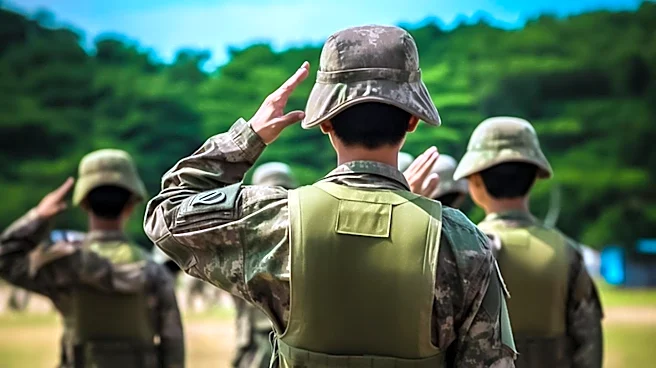
the two nations. General Mamadou met with Rwanda's Chief of Defence Staff, General MK Mubarakh, at RDF Headquarters in Kimihurura, and also paid a courtesy call to Rwanda’s Minister of Defence, Juvenal Marizamunda. The talks centered on enhancing existing bilateral defense relations, exploring avenues for improved military training, operational cooperation, and the implementation of previously signed agreements. A significant part of the visit included General Mamadou and General Mubarakh attending a graduation ceremony at the RDF Basic Military Training Centre in Nasho, Kirehe District, where 254 officers and other ranks from the Central African Republic Armed Forces (FACA) completed a six-month Basic Special Operations Force Training program.
Why It's Important?
This strengthened defense partnership between Rwanda and the Central African Republic (CAR) is important for regional stability and security in Central Africa. For Rwanda, it solidifies its role as a key security partner in the region, potentially expanding its influence and expertise in military capacity-building. For the CAR, receiving specialized training for its armed forces (FACA) is crucial for enhancing its internal security capabilities, particularly in combating armed groups and maintaining peace. The training of 254 FACA personnel in special operations signifies a substantial investment in the CAR's military effectiveness, which could lead to more stable governance and improved security conditions for its citizens. This cooperation also demonstrates a commitment to addressing shared security challenges through bilateral agreements and joint efforts, potentially reducing reliance on external interventions and fostering self-sufficiency in defense.
What's Next?
The discussions and training initiatives are expected to lead to further implementation of previously signed defense agreements between Rwanda and the Central African Republic. This could involve more joint training programs, increased intelligence sharing, and potentially coordinated operations in areas of mutual security concern. The successful graduation of FACA personnel from the special operations training program suggests a continued focus on enhancing the CAR's military capabilities. Future engagements may include advanced training modules, equipment procurement discussions, and strategic planning sessions to address evolving security threats. The ongoing partnership is likely to be a continuous process of collaboration, with both nations seeking to deepen their defense ties for long-term regional stability.
Beyond the Headlines
The deepening defense cooperation between Rwanda and the Central African Republic extends beyond immediate military benefits, touching upon broader geopolitical and humanitarian implications. Rwanda's active role in training and supporting CAR's military could be seen as part of a larger strategy to project its influence and contribute to African-led security solutions. This approach can foster greater self-reliance within the continent for managing security challenges, potentially reducing the need for external military interventions. From a humanitarian perspective, a more capable and well-trained CAR military could lead to improved protection of civilians and better enforcement of law and order, which are critical for stability and development. However, such partnerships also raise questions about accountability and human rights, emphasizing the importance of ensuring that military training and cooperation adhere to international standards and promote ethical conduct within the armed forces.