




What's Happening?
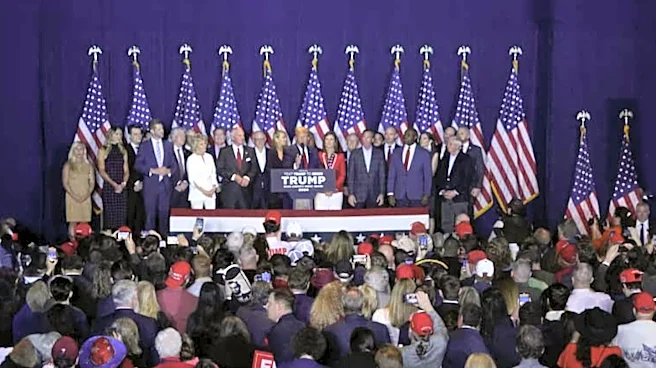
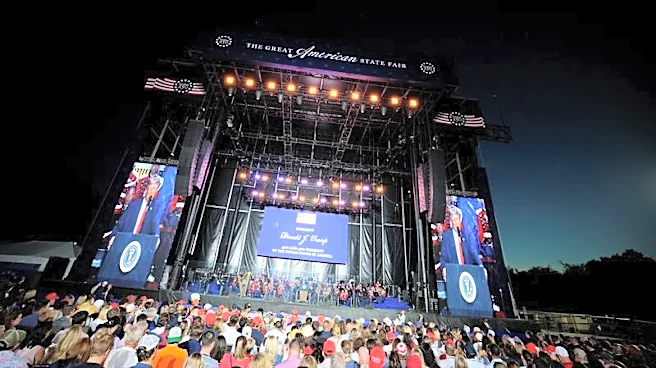
President Donald Trump faced criticism following the Great American State Fair, organized by his event group Freedom 250, which experienced low attendance and logistical issues. The event, intended to mark the beginning of a 'Golden Age' for America,
was marred by power outages, performer cancellations, and adverse weather conditions. Despite these setbacks, President Trump took to Truth Social to defend the event, claiming high attendance and a successful execution. The fair, which was supposed to feature all 50 states, saw some states opting out due to high costs and perceived partisanship. The event's challenges included a power cut that affected the food pavilion and a misspelled digital billboard announcement, which led to further online ridicule.
Why It's Important?
The event highlights the challenges of organizing large-scale public events and the potential for political events to become polarizing. The sparse attendance and logistical issues at the fair reflect broader public sentiment and the difficulties in rallying bipartisan support for national celebrations. The criticism faced by President Trump underscores the ongoing political divisions in the U.S., where even national events can become contentious. The fair's execution and the subsequent public reaction may influence future event planning and political strategies, particularly in how political figures engage with public celebrations.
What's Next?
President Trump is scheduled to give another speech on July 4th, promising larger festivities. The upcoming event will likely be closely watched to see if the issues faced at the Great American State Fair are addressed. Stakeholders, including political leaders and event organizers, may need to reassess their strategies to ensure successful and inclusive national celebrations. The response to the July 4th event could impact public perception and political discourse, especially as the nation approaches future elections.