





What's Happening?
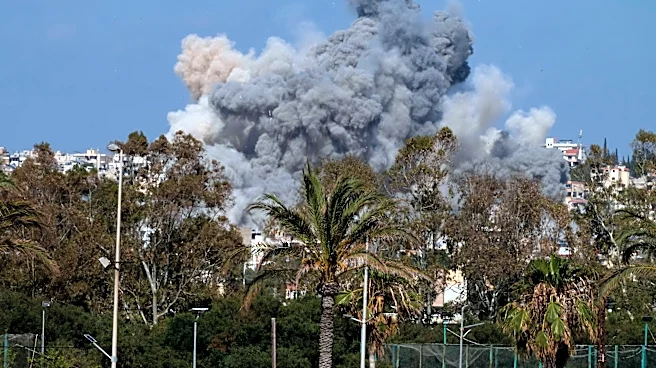
Iran's recent military actions have targeted critical infrastructure in the Gulf region, leading to a significant humanitarian and economic crisis. Following the launch of Operation Epic Fury by the United States and Israel, Iran retaliated by attacking
desalination plants, airports, and energy infrastructure across the Gulf states. These attacks have disrupted essential services, including water and food supplies, causing a severe impact on civilian populations. The Gulf Cooperation Council (GCC) states, heavily reliant on imports through the Strait of Hormuz, have faced skyrocketing food prices and shortages. The situation has affected millions, particularly migrant workers who form the backbone of the Gulf economies. The International Monetary Fund (IMF) has downgraded regional growth projections, highlighting the economic fallout from these events.
Why It's Important?
The strategic targeting of civilian infrastructure by Iran underscores the vulnerabilities of the Gulf states and the broader Middle East. The disruption of essential services like water and food supplies has not only created immediate humanitarian challenges but also threatens long-term economic stability in the region. The reliance on the Strait of Hormuz for oil and food imports makes these countries particularly susceptible to geopolitical tensions. The crisis has broader implications for global energy markets and food security, potentially affecting international economic stability. The situation also highlights the geopolitical complexities of the region, where military actions have far-reaching consequences for civilian populations and economic systems.
What's Next?
The ongoing conflict and its impact on civilian infrastructure may lead to increased international diplomatic efforts to de-escalate tensions and secure humanitarian aid for affected populations. Regional governments may need to reassess their security and economic strategies to mitigate future risks. The international community, including organizations like the United Nations, may play a role in facilitating dialogue and providing humanitarian assistance. Additionally, the crisis could prompt a reevaluation of energy and food security policies in the Gulf states and beyond.
Beyond the Headlines
The crisis highlights the ethical and humanitarian implications of using civilian infrastructure as a strategic target in military conflicts. The long-term impact on migrant workers and their home countries, which rely on remittances, adds another layer of complexity to the situation. The events may also influence future international policies regarding conflict resolution and the protection of civilian infrastructure in war zones.