



What's Happening?
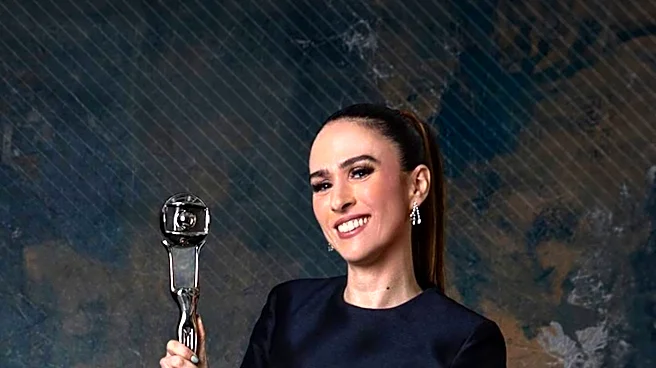
Shreya Chandra, an undergraduate student at the University of California, Davis, has been named a 2026 20 Twenties winner by Aviation Week. She is pursuing dual degrees in Aerospace Science and Engineering and Mechanical Engineering. Chandra's work is focused
on advancing human exploration systems through innovative design and materials research. Her notable contributions include the development of a spacesuit boot concept designed for enhanced traction and stability on icy extraterrestrial terrains. This prototype, funded by competitive space grants, addresses mobility challenges for future missions to icy moons and asteroids. Chandra has also presented her research on radiation shielding systems at the American Institute of Aeronautics and Astronautics' SciTech Forum and has been involved in mission design and spacecraft systems research through various aerospace internships.
Why It's Important?
Chandra's recognition as a 20 Twenties winner highlights the importance of innovation in aerospace engineering, particularly in the context of human exploration systems. Her work on spacesuit design and radiation shielding systems is crucial for the advancement of space exploration, addressing key challenges in mobility and safety for missions to harsh environments like icy moons and asteroids. This recognition not only underscores the potential impact of her research on future space missions but also emphasizes the role of young engineers in driving technological advancements in the aerospace industry. As space exploration continues to be a priority for national and international space agencies, contributions like Chandra's are vital for overcoming technical barriers and ensuring the success of future missions.
What's Next?
Chandra's ongoing research and development efforts are likely to continue influencing the field of aerospace engineering, particularly in the design of human exploration systems. Her involvement in space-focused student organizations and her commitment to a career in advancing human exploration systems suggest that she will remain a key figure in the field. As her work progresses, it may attract further attention from space agencies and industry leaders, potentially leading to collaborations or funding opportunities that could accelerate the implementation of her innovations in real-world space missions.