






What's Happening?
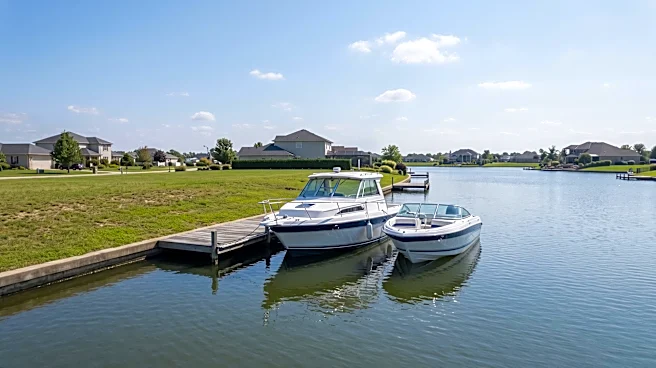
Michael Droogleever, a Marine veteran in St. Clair Shores, Michigan, has accumulated over $15,000 in fines for docking his two boats at a vacant lot he owns. He purchased the lot four years ago with intentions to build a home. However, a local ordinance
in St. Clair Shores stipulates that mooring a watercraft along residential riparian property is only permitted if a residence exists and is occupied. Since no home has been built on Droogleever's lot yet, the city has continuously issued fines. Droogleever argues that these mounting fines are creating a financial strain, which in turn is delaying his ability to construct the home. His attorney, Nicholas Somberg, is challenging the constitutionality of this ordinance in court, asserting that it infringes upon fundamental riparian rights.
Why It's Important?
This case highlights a significant legal and property rights dispute that could have broader implications for property owners, particularly those with riparian rights, across Michigan and potentially other states with similar ordinances. The attorney's argument centers on the idea that the ordinance creates an unconstitutional 'class distinction' by allowing boat docking only for occupied residences, thereby penalizing those in the process of building or those who own vacant waterfront property. If the court sides with Droogleever, it could lead to a re-evaluation of similar municipal ordinances that restrict property use based on occupancy status, potentially setting a precedent for how cities regulate waterfront properties. Conversely, if the city's ordinance is upheld, it could reinforce the power of local governments to impose strict conditions on property use, impacting development and investment in waterfront areas.
What's Next?
Droogleever's attorney, Nicholas Somberg, has appealed a district court's previous rejection of his constitutional challenge. He has also filed a motion to pause the ongoing fines and an injunction to prevent further fines from being issued while the legal proceedings are underway. Somberg expressed confidence that higher courts will agree with their argument, deeming the ordinance illogical. Meanwhile, Droogleever is continuing with his plans to build a home on the property and is currently working with an architect. The city of St. Clair Shores has declined to comment on the matter, citing the pending litigation. The outcome of this appeal will determine the future of Droogleever's ability to dock his boats and could influence similar property rights cases.
Beyond the Headlines
Beyond the immediate legal battle, this situation touches upon the delicate balance between individual property rights and municipal regulatory authority. The ordinance, as interpreted by the city, effectively dictates not just how property can be used, but also the timeline and conditions under which certain uses are permitted, even for property owners who are actively paying taxes and maintaining their land. The attorney's claim that St. Clair Shores is the only city in Michigan with such a requirement suggests a potential overreach or an unusual interpretation of riparian rights. The case also brings to light community dynamics, with some neighbors alleging that Droogleever has been running a 'social club' from the property, causing disruptions. While Droogleever denies these claims, they add a layer of complexity to the dispute, illustrating how local ordinances can become points of contention between residents and local government, often fueled by neighborhood concerns.