


What's Happening?
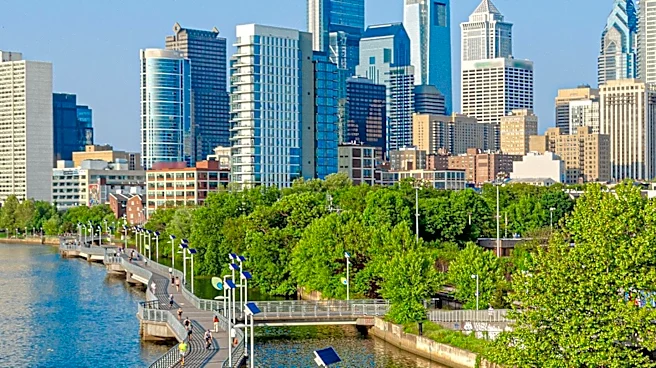
A dispute has emerged in Philadelphia's Chinatown neighborhood between Choi Funeral Home and local cyclists regarding the use of a bike lane for staging funeral processions. Cyclists allege that vehicles parked in the bike lane force them into high-speed
traffic, posing a safety risk. Jayson Choi, owner and funeral director of Choi Funeral Home, states that the business uses the bike lane only a few times a month for short durations and that workers were shown how to temporarily remove flexible posts to accommodate vehicles. Video evidence shows a funeral home employee removing a flexible post. The City of Philadelphia has stated that parking in the bike lane is not permitted and that removing the flex-posts is not allowed. The city is consulting with its Law Department on applicable laws and is working with the funeral home to find an alternative solution.
Why It's Important?
This conflict highlights a broader urban planning challenge: balancing the needs of diverse community stakeholders within limited public space. The bike lane, intended to enhance cyclist safety and promote alternative transportation, is clashing with the long-standing cultural and logistical requirements of a funeral home. This situation underscores the tension between modern urban infrastructure development and established community practices. For cyclists, the issue is one of immediate safety and the integrity of dedicated bike infrastructure. For the funeral home, it's about maintaining essential services and cultural traditions in a densely populated area. The city's involvement signifies the need for municipal authorities to mediate such disputes and develop inclusive solutions that respect both safety regulations and community needs, potentially setting a precedent for similar conflicts in other urban areas.
What's Next?
The City of Philadelphia is actively working with Choi Funeral Home to find an alternative parking or traffic plan that accommodates funeral processions without compromising bike lane safety. This collaboration will likely involve exploring options such as designated temporary parking zones, adjusted procession routes, or alternative staging areas. The city's legal department will clarify whether existing Pennsylvania laws regarding funeral processions apply to bike lanes, which could influence future policy decisions. Cyclist advocacy groups, such as Philly Bike Action, will likely continue to monitor the situation and advocate for the preservation of bike lane integrity. The outcome of these discussions could lead to a new model for managing shared urban spaces, potentially involving community engagement and flexible regulatory approaches to address unique local needs.
Beyond the Headlines
This dispute delves into the complex interplay of urban development, cultural practices, and public safety. The funeral home's use of the bike lane, rooted in decades of tradition, clashes with the relatively newer concept of dedicated cycling infrastructure. This highlights how urban planning decisions, while often well-intentioned, can inadvertently disrupt established community norms and create friction. The online escalation of the conflict, including Reddit threads and negative reviews, demonstrates the power of digital platforms in amplifying local disputes and mobilizing public opinion. The situation also raises ethical questions about the balance between individual business needs, community traditions, and the collective good of public safety and infrastructure. The resolution will require not just logistical solutions but also a deeper understanding and respect for the diverse needs and histories within the community.