






What's Happening?
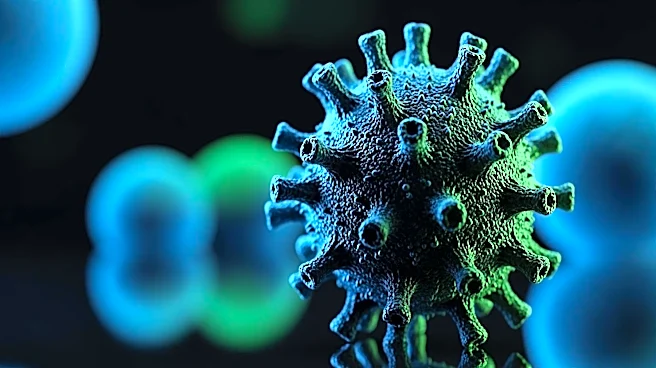
A new Ebola outbreak in Africa, originating in the Democratic Republic of Congo, is threatening to become the worst in history. The outbreak has spread to neighboring Uganda, with confirmed cases and deaths reported. The Bundibugyo virus, a species of Ebola,
is harder to detect and lacks a vaccine, complicating containment efforts. The situation is exacerbated by the recent dismantling of the U.S. Agency for International Development (USAID), which has hindered early detection and response capabilities. The outbreak is occurring in a volatile region with limited healthcare infrastructure, further complicating efforts to control the spread.
Why It's Important?
The Ebola outbreak underscores the critical role of international aid and cooperation in managing global health crises. The withdrawal of USAID and reduced funding for the World Health Organization have weakened surveillance and response systems, allowing the virus to spread unchecked. This situation highlights the interconnectedness of global health security and the potential consequences of reduced international support. The outbreak poses a significant threat to regional stability and could have broader implications for global health if not contained effectively.
What's Next?
Efforts to contain the Ebola outbreak will require coordinated international support and resources. Strengthening laboratory capacity and improving surveillance systems are immediate priorities. The international community may need to reassess its approach to global health funding and support to prevent future outbreaks. The situation also calls for renewed focus on building trust with affected communities to ensure effective response measures. As the outbreak evolves, ongoing monitoring and adaptation of strategies will be crucial to mitigate its impact.