
What's Happening?
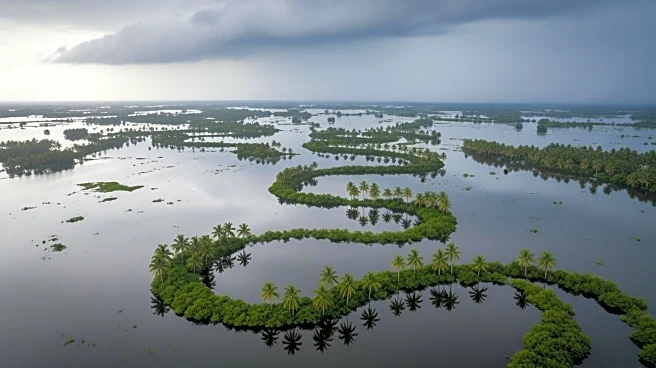
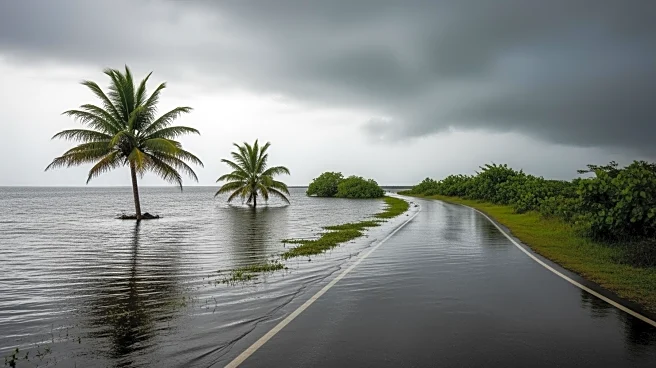
Jason Momoa and his family were among thousands forced to evacuate O’ahu’s North Shore due to severe flooding caused by Hawaii’s Kona lows, a type of seasonal cyclone. This storm marks the second to hit the archipelago within a week, resulting in the worst
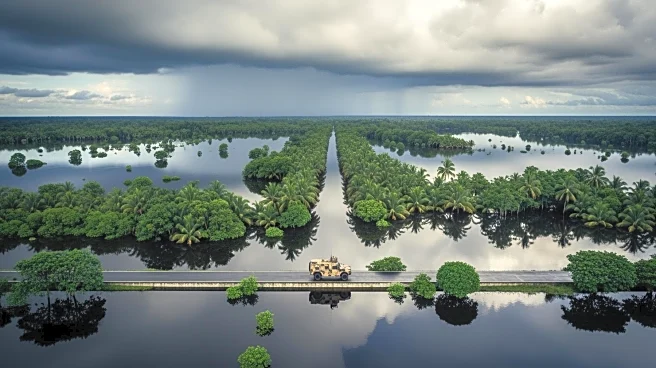
flooding the area has seen in two decades. Momoa shared on social media that his family is safe, although their power went out, and expressed concern for those who were not as fortunate. Governor Josh Green reported no deaths or missing persons, with over 200 people rescued and fewer than a dozen treated for hypothermia. Evacuation orders were issued for more than 5,000 people north of Honolulu, and road closures were implemented statewide. Although evacuation orders have been lifted, a flood watch remains in effect for several islands.
Why It's Important?
The flooding in Hawaii highlights the vulnerability of island communities to extreme weather events, which can lead to significant disruptions and require large-scale emergency responses. The evacuation of thousands, including high-profile individuals like Jason Momoa, underscores the severity of the situation. Such events can strain local resources and infrastructure, necessitating coordinated efforts for rescue and relief. The impact on residents, especially those already facing hardships, is profound, as communities must mobilize to support displaced families and individuals. The situation also draws attention to the broader implications of climate change, which may increase the frequency and intensity of such storms, affecting not only Hawaii but other coastal regions in the U.S.
What's Next?
As the immediate threat of flooding subsides, focus will shift to recovery and rebuilding efforts. Authorities and community leaders will likely assess the damage and prioritize aid distribution to affected areas. Jason Momoa has indicated plans for a fundraiser to support relief efforts, which may involve collaboration with local organizations and government agencies. Long-term strategies may include improving infrastructure resilience and emergency preparedness to better handle future storms. The situation may also prompt discussions on climate change adaptation measures, both locally and nationally, to mitigate the impact of similar events in the future.