


What's Happening?
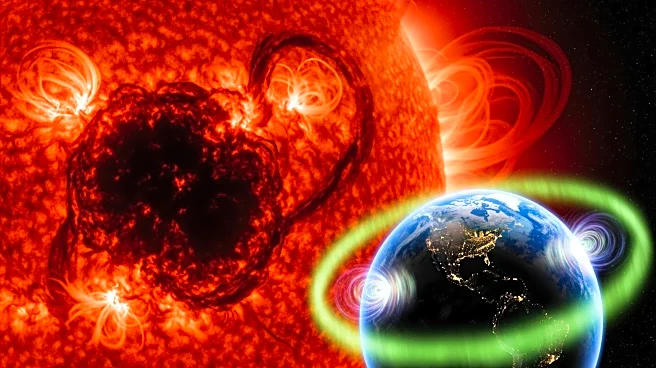
On December 6, 2025, a Carrington-class sunspot complex, AR 4294-4296, is facing Earth, raising concerns about potential solar flares. This sunspot is comparable in size to the one that caused the 1859 Carrington Event, the strongest solar storm ever
recorded. Although the sunspot has the potential to produce high-end X-class solar flares, no extreme events have been observed yet. Concurrently, a G3 geomagnetic storm, which peaked earlier in the week, has subsided, but minor storming is expected due to recent solar activity. Additionally, December's Cold Moon, the last supermoon of 2025, is visible, adding to the celestial phenomena.
Why It's Important?
The presence of a Carrington-class sunspot and the associated geomagnetic storms have significant implications for Earth's technological infrastructure. Such solar activity can disrupt satellite operations, power grids, and communication systems, potentially leading to economic losses. The Cold Moon supermoon, while a natural spectacle, can interfere with observations of other celestial events like auroras and meteor showers. Understanding and monitoring these space weather events are crucial for mitigating their impact on modern technology and infrastructure.
What's Next?
Scientists will continue to monitor the sunspot complex AR 4294-4296 for any signs of increased solar activity. If the sunspot remains active, it could reappear later in the month, potentially causing further geomagnetic disturbances. The National Oceanic and Atmospheric Administration (NOAA) will provide updates on space weather conditions, advising industries reliant on satellite and communication technologies to prepare for possible disruptions. The Cold Moon will remain a prominent feature in the night sky, offering opportunities for public engagement and education in astronomy.